Book Appointment Now

Baseball Field Setup: Best Practices for Coaches
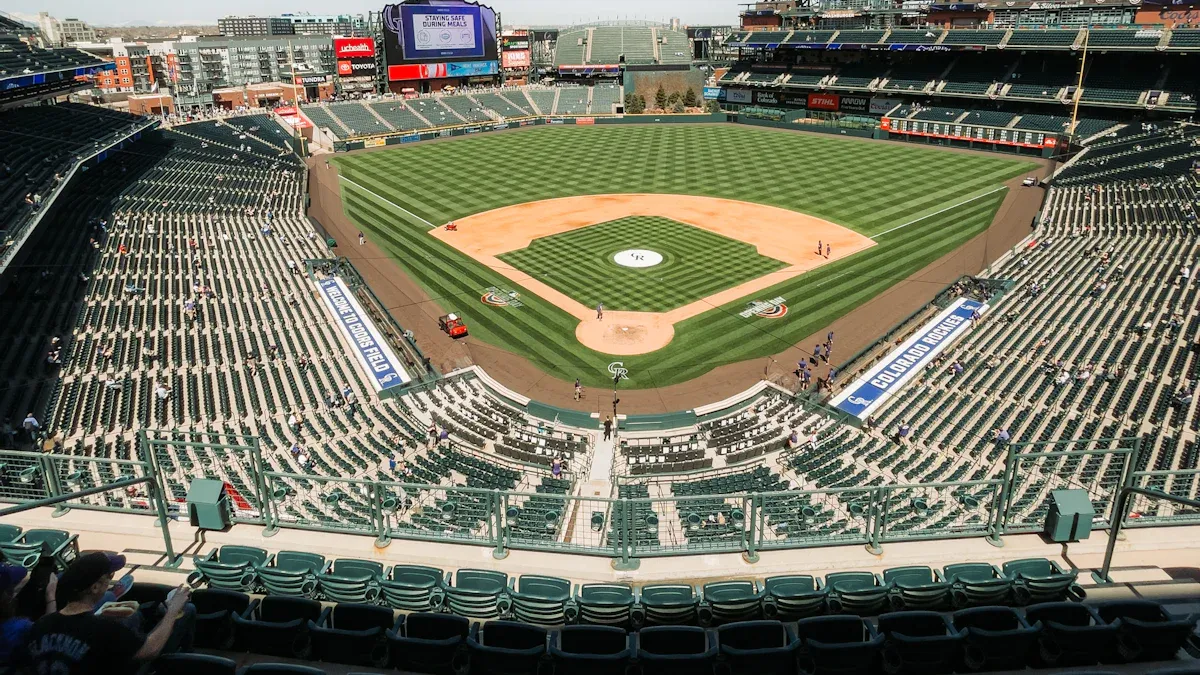
A well-set baseball field setup is crucial for ensuring player safety and enhancing performance. When you prioritize proper baseball field setup, you create an environment where athletes can thrive. Key areas that require your attention include the infield and outfield dimensions, equipment placement, and safety measures. Addressing these elements will help you maintain an optimal playing surface and a safe atmosphere for everyone involved.
Time Period | Key Areas of Attention |
|---|---|
Preseason | – Deep edge all grass boundaries to prevent infield lip development |
– Apply pre-emergent weed control to turf areas | |
– Rebuild pitcher’s mound and batter’s boxes | |
– Test irrigation systems | |
– Add new infield material as needed | |
In-Season | – Level and grade infield skin |
– Monitor moisture levels daily | |
– Repair high-wear areas (mound, plate, bases) | |
– Mow outfield grass 2-3 times weekly | |
Post-Season | – Core aerate turf areas |
– Overseed worn grass areas | |
– Apply fall fertilizer | |
– Add protective tarps to mound and plate areas | |
– Inspect and repair irrigation |
Field Dimensions
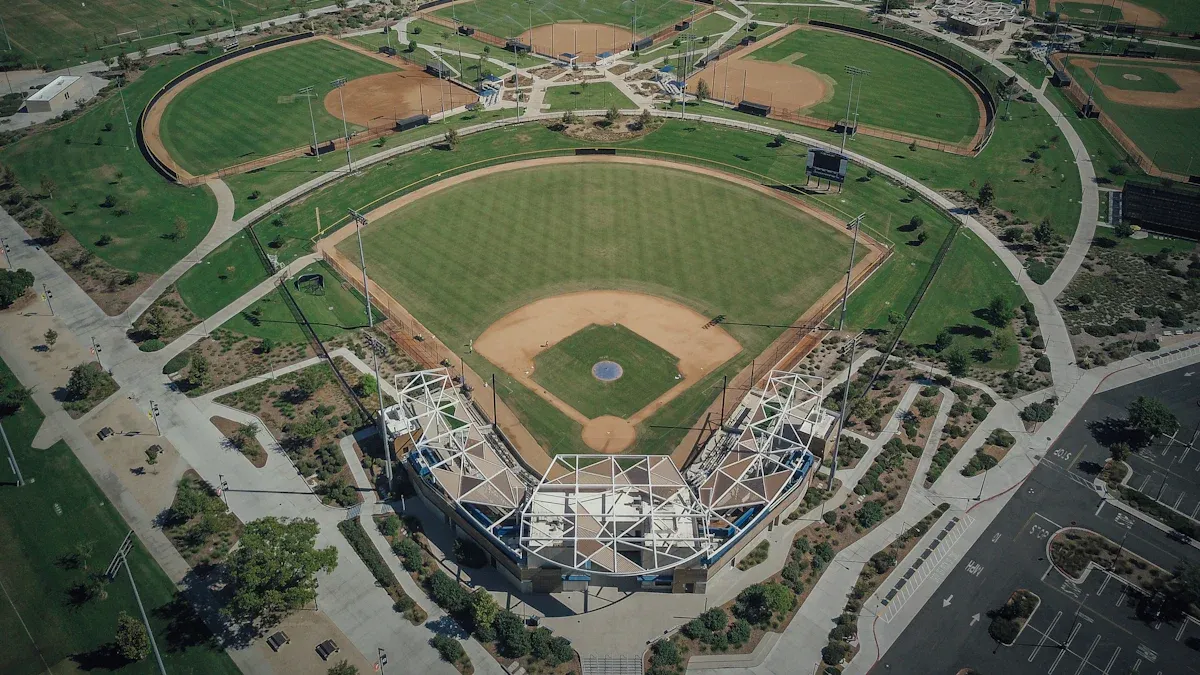
Infield and Outfield
Understanding the dimensions of the baseball field is essential for effective gameplay. Each level of play has specific measurements that impact how the game unfolds. Here are the standard dimensions for various age groups:
Age Group | Basepaths | Pitching Mound | Outfield Walls |
|---|---|---|---|
Youth Baseball Field | 60′ | 46′ | 200′ or higher |
Junior/Senior Baseball | 75′ or 90′ | 60′ 6″ | 290′ or higher |
Adult/Professional Field | 90′ | 60′ 6″ | 300′ to 340′ at corners, 400′ to center field |
The infield dimensions are standardized. The distance from home plate to second base measures 127 feet 3 3/8 inches, and each base path is 90 feet. These measurements ensure that players can perform at their best while minimizing the risk of injury.
Base Paths and Pitcher’s Rubber
The base paths and pitcher’s rubber are critical components of the baseball field layout. Proper measurements here can significantly affect gameplay and player safety.
League Type | Pitcher’s Rubber Distance | Base Path Distance |
|---|---|---|
Major League Baseball | 60 feet, 6 inches | 90 feet |
Little League (Major and below) | 46 feet | 60 feet |
Intermediate (50/70) | 50 feet | 70 feet |
Junior/Senior League | 60 feet, 6 inches | 90 feet |
Pony Baseball (Pony division) | 54 feet | 80 feet |
Cal Ripken (50/70) | 50 feet | 70 feet |
Little League (12 and under) | 46 feet | 60 feet |
The standard distance for the pitcher’s plate is 60 feet 6 inches, with the mound having an 18-foot diameter. The slope of the mound descends 6 inches in front of the rubber, tapering down 1 inch for every foot towards home plate.
Improper measurements of the pitcher’s rubber and base paths can lead to flawed pitching mechanics. This can increase the risk of injury and negatively impact game outcomes. For example, if a pitcher lands with an incorrect foot position, it can affect their pelvic rotation and energy transfer, leading to increased stress on the shoulder and elbow.
Field dimensions vary significantly across different levels of competitive baseball. Major League Baseball fields have unique outfield sizes, with center field distances typically starting at 400 ft. In contrast, high school and college fields maintain similar dimensions to MLB, while middle school fields are smaller. Youth leagues, such as PONY and Little League, have even more varied dimensions based on age groups, with base distances and pitching distances tailored to the developmental needs of younger players.
Understanding these dimensions helps you create a proper layout for your baseball field. This knowledge ensures that players can perform safely and effectively, enhancing their overall experience on the field.
Equipment Placement
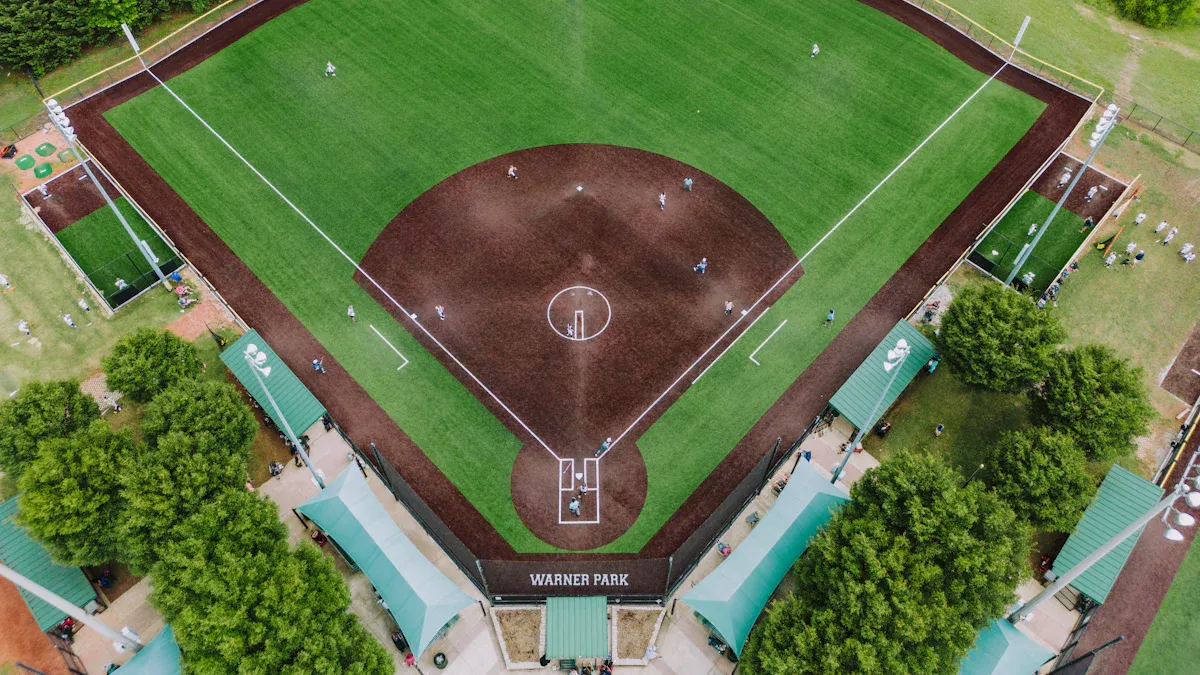
Dugouts and Bullpens
The placement of dugouts and bullpens plays a vital role in the overall layout of your baseball field. You should position dugouts at least 25 feet from the foul lines. This distance ensures that players can safely enter and exit without interfering with the game. Additionally, placing bullpens near the dugouts allows for quick access to pitchers warming up.
When setting up these areas, consider the flow of the game. You want players to have easy access to their equipment and to be able to communicate with coaches effectively. A well-placed dugout can enhance team dynamics and keep players focused.
Bases and Pitching Rubber
Proper placement of bases and the pitching rubber is crucial for fair play and player safety. Here are some key guidelines to follow:
The pivot foot must be on or touching the rubber.
The pivot foot must be entirely inside the left and right edges of the pitching rubber.
The free foot must be entirely in front of the pitching rubber.
These guidelines help maintain consistency in gameplay. When you set the bases, ensure they align correctly with the pitcher’s rubber. This alignment supports proper base running and pitching mechanics, reducing the risk of injury.
Additionally, consider the on-deck circle’s placement. It should be positioned away from the field of play to keep players safe while waiting to bat. This setup protects both players and spectators from potential accidents during the game.
By following these equipment placement strategies, you create a proper layout that enhances gameplay and prioritizes safety for everyone involved.
Player Safety
Field Surface and Obstacles
Ensuring the safety of players and spectators starts with maintaining the field surface. A well-kept field minimizes hazards that can lead to injuries. Common field surface hazards include:
Poor weather: Cold or snowy conditions can harden the ground, reducing cushioning during sharp movements.
Poor maintenance: Uneven surfaces from too many divots can lead to slipping or tripping hazards.
Heavy lips: Raised areas where the infield meets the outfield can create tripping hazards, increasing the risk of ankle sprains.
Standing water: Accumulated water can create muddy and slippery conditions, leading to slips and falls.
Worn-out areas: Compacted soil from heavy foot traffic can hinder water infiltration, causing the turf to become damaged.
To manage these obstacles effectively, you should establish regular schedules for mowing, watering, and grooming the field. Invest in appropriate tools for efficient field care. Water the field at optimal times to reduce evaporation. Use varied drag techniques to maintain the infield and prevent injuries. Regularly check and maintain field dimensions to ensure safety.
Fencing and Spectator Areas
Fencing plays a crucial role in protecting both players and spectators. Proper fencing height and materials can significantly enhance safety. Here are some recommendations:
Outfield fencing should be about 6 feet high with bright tubing on the top rail for visibility and padding.
Bullpen areas require an 8-foot tall fence with a privacy screen.
Fences around a track should be at least 4 feet tall to prevent entry during play.
Spectator barriers should be 4 to 6 feet high, while backstops must be 25 feet tall to ensure safety.
In recent years, baseball organizations have implemented protective netting to safeguard spectators from foul balls and flying bats. This netting extends behind home plate and along the baselines. It is constructed from durable materials like polyethylene or nylon, ensuring it can withstand high-speed impacts. The design aims to protect fans while minimizing obstruction of views.
The MLB has introduced regulations for netting to extend beyond the dugouts, enhancing fan safety. This change came after several incidents, including a notable accident in 2017. The netting is designed to be thin and translucent, ensuring that while it protects spectators, it does not significantly obstruct their view of the game.
By prioritizing the safety of players and spectators through proper field maintenance and effective fencing, you create a secure environment for everyone involved in the game of baseball.
Maintenance Tips
Regular Upkeep
Regular maintenance is essential for keeping your baseball field in top condition. Here are some effective practices to ensure field longevity:
Soil Management: Test the soil regularly and aerate it to improve drainage and nutrient absorption.
Grass Care: Mow the grass consistently to a height of 1.5 to 2.5 inches. This height promotes healthy growth and prevents uneven bounces.
Infield Maintenance: Drag the infield after games to maintain a smooth playing surface. Manage moisture levels to prevent dust and ensure stability.
Irrigation Systems: Establish efficient watering practices to maintain consistent moisture levels throughout the field.
Pest and Disease Control: Monitor for pests and diseases to protect the field’s health.
You should perform daily upkeep during the playing season. This includes mowing, grooming, and dragging the infield dirt. Regular maintenance contributes to player safety by ensuring a well-kept surface, reducing the risk of injuries.
Maintenance Task | Frequency |
|---|---|
Daily/Weekly Cleaning | Regularly throughout the year |
Professional Turf Care | Monthly or quarterly |
Basic Grooming Tasks | Every 40 hours of field use |
Seasonal Preparations
Preparing your baseball field for different weather conditions is crucial. Here are some seasonal tips:
Spring: Monitor weather conditions closely. Deploy tarps for critical areas to protect against unexpected rain.
Summer: Focus on moisture retention. Prepare for thunderstorms and manage UV exposure on clay areas.
Fall: Manage dew and prepare for freeze/thaw cycles. Ensure proper drainage to prevent water accumulation.
Winter: Winterize fields by managing snow loads and conducting periodic inspections.
By following these maintenance tips, you can ensure that your baseball field remains safe and playable throughout the year. Regular upkeep and seasonal preparations will enhance the overall experience for players and spectators alike.
Game Day Setup
Pre-Game Checks
Before the game starts, you must conduct several pre-game checks to ensure the field is ready for play. Follow this checklist to prepare effectively:
Add water to the infield surface as needed.
Smooth out the mound and home plate area, then cover them.
Ensure all equipment and tools are in good working order and staged for use.
Develop a detailed checklist for pre-game preparations.
Fill the utility vehicle with gas and ensure the chalk box is stocked.
Assign specific duties to crew members based on the time available.
Conduct a final field walk to check for any missed details.
Additionally, set the game bases after watering to ensure they are dry. Align the bases consistently with logos for professional games. Fix any issues immediately before the next pre-game setup. Practicing this routine is crucial to create optimal playing conditions for athletes.
Spectator Setup
Setting up the spectator areas is just as important as preparing the field. You want to maximize comfort and safety for everyone attending the game. Here are some best practices to follow:
Best Practice | Description |
|---|---|
Seating Specifications | Use individual stadium chairs that are ergonomically designed and attached to the main structure. |
Circulation of Different Groups | Create a coordinated plan for the movement of various groups (public, VIPs, staff). |
Protection from the Elements | Incorporate retractable roofs to shield spectators from extreme weather conditions. |
Adequate Leg Room | Space rows to allow for easy movement and emergency evacuations, with recommended distances. |
Proper Sight Lines | Ensure fans have a clear view of the field, accounting for potential obstructions like advertising. |
Ensure that seats are at least 45 cm wide to accommodate various body types. Backrests must provide adequate support to prevent discomfort. Adequate space between rows (85 cm) is crucial for comfort and safety during evacuations. By following these guidelines, you create a welcoming environment for fans while ensuring their safety during the game.
In summary, effective baseball field setup is vital for player safety and performance. As a coach, you should focus on the following best practices:
Ensure accurate field dimensions to prevent injuries.
Strategically place equipment for optimal gameplay.
Maintain a safe playing surface by addressing obstacles and hazards.
Regularly upkeep the field to avoid costly repairs.
Avoid common mistakes like eyeballing measurements or neglecting maintenance. Implementing these practices can significantly enhance team performance and reduce injuries. By prioritizing a well-set baseball field, you create a safer and more effective environment for your players.
FAQ
What are the standard dimensions for a youth baseball field?
Youth baseball fields typically have base paths of 60 feet and a pitching mound distance of 46 feet. Outfield walls should be at least 200 feet away from home plate.
How often should I maintain the baseball field?
You should perform daily upkeep during the season, including mowing and grooming. Regular maintenance helps prevent injuries and keeps the field in playable condition.
What safety measures should I take for spectators?
Ensure proper fencing around the field, especially in the outfield. Use protective netting to shield spectators from foul balls and flying bats.
How can I prepare the field for different weather conditions?
Monitor weather forecasts closely. Use tarps to protect critical areas from rain in spring and manage moisture levels during summer heat.
Why is proper equipment placement important?
Proper equipment placement enhances gameplay and player safety. It allows for smooth transitions during the game and minimizes the risk of accidents.