Book Appointment Now

Advanced Boxing Training for Competitors and Pros
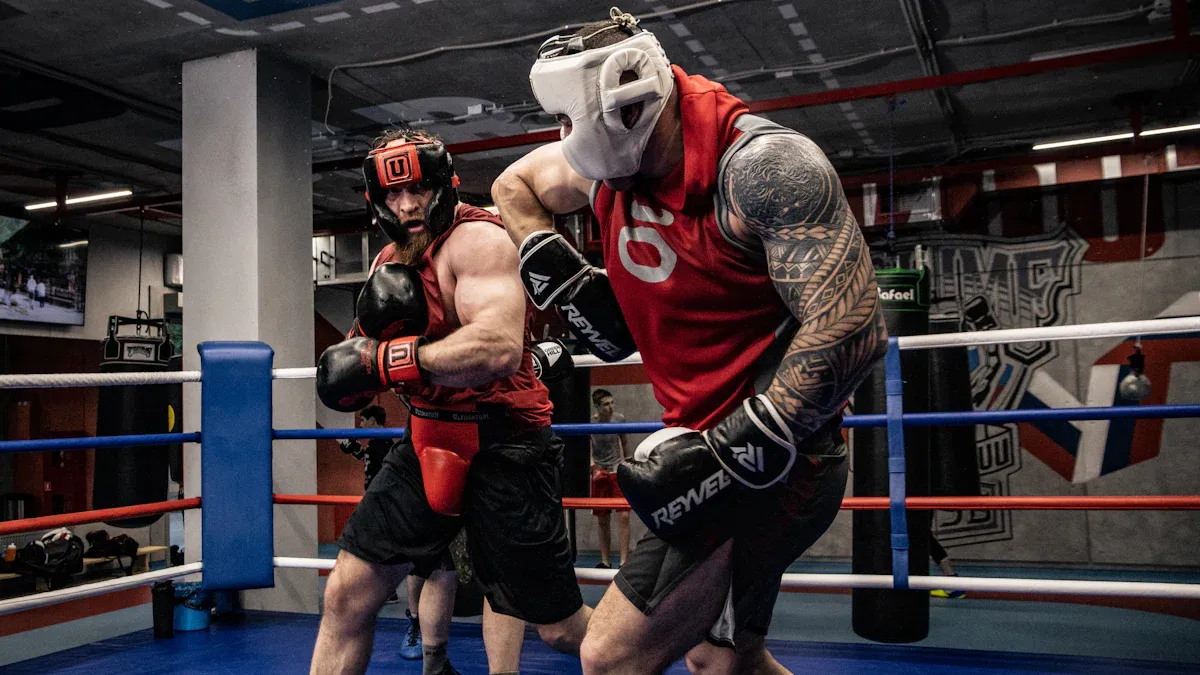
Advanced boxing training plays a crucial role in your journey as a competitor. This training enhances your performance and prepares you for the rigors of competitive boxing. Research shows that winning boxers often demonstrate more complex decision-making skills during fights, which can provide them with a competitive edge. As an intermediate to advanced boxer, focusing on advanced techniques can significantly improve your chances of becoming a boxing champion. Embracing these advanced methods will help you stand out in the ring and achieve your goals.
Key Takeaways
Advanced boxing training improves your performance and decision-making skills in the ring.
Incorporate strength and endurance workouts to enhance your punching power and stamina.
Master advanced techniques like parrying and shoulder roll defense to elevate your boxing skills.
Focus on footwork drills to improve agility and create effective angles during fights.
Prioritize nutrition and recovery strategies to maintain peak performance and prevent injuries.
Advanced Conditioning Techniques

Advanced conditioning techniques are essential for serious boxers. They enhance both strength and endurance, which are critical for success in the ring. Strength training builds the muscle power necessary for effective punches, while endurance workouts improve your stamina, allowing you to maintain high performance throughout the match.
Strength Training
Strength training is vital for boxers. It increases your punching power and speed, which can make a significant difference in your performance. Here are some recommended exercises:
Exercise | Benefits |
|---|---|
Pull-ups | Builds a powerful back and strong arms, critical for clinching and punch retraction. |
Medicine ball slams | Develops explosive rotational power, mimicking the hip and torso rotation used in punches. |
Farmer’s walk | Enhances core stability and grip strength, essential for maintaining a solid fist during fights. |
Jump rope | Improves cardiovascular stamina, footwork, coordination, and calf strength for agility in the ring. |
Incorporating unilateral exercises, like Bulgarian split squats, can improve your balance and control during asymmetric movements like punching. Bilateral exercises, such as barbell squats and bench presses, train your body to generate power from both sides and increase maximum strength.
Strengthening your core is also crucial. A strong core helps you maintain balance, absorb shock from hits, and generate power for punches. Research shows that improved trunk strength directly enhances boxing mechanics, making it easier to execute techniques effectively.
Endurance Workouts
Endurance workouts are equally important. They allow you to sustain high-intensity efforts over extended periods, which is vital in boxing. Here are some effective endurance workout routines:
Exercise Type | Description | Duration |
|---|---|---|
Heavy Bag Training | Engages full body, improves technique and power through various punches. | 3-5 rounds of 3 minutes |
Speed Bag | Enhances shoulder endurance, coordination, and hand speed. | 3-4 rounds of 2 minutes |
Shadowboxing | Focuses on technique, footwork, and conditioning with intentional movement. | 3-5 rounds of 3 minutes |
Jump Rope | Builds stamina, agility, and coordination through rhythmic jumping. | 3-5 minutes at a time |
Improved endurance allows you to maintain explosive output across multiple rounds. Research indicates that aerobic metabolism provides about 77% of the energy needed during a match. This highlights the importance of developing your aerobic capacity. Elite boxers typically achieve high aerobic capacities, enabling them to sustain performance during demanding bouts.
Advanced Boxing Skills

Advanced boxing skills set professional boxers apart from amateurs. These skills enhance your ability to control the fight and respond effectively to your opponent’s actions. Mastering techniques like the parry and counter-parry, along with the shoulder roll defense, can significantly improve your performance in the ring.
Parry and Counter-Parry
The parry and counter-parry technique is essential for effective defense and offense. This technique allows you to deflect punches while positioning yourself for a counterattack. Here are some key elements to consider:
Proper Positioning: Maintain balance and keep your weight forward. This stance helps you react quickly after a defensive move.
Minimal Force: Use just enough resistance to redirect your opponent’s punch. This approach emphasizes technique over brute strength.
Quick Transition: Practice drills that reinforce the habit of moving from defense to offense swiftly.
Effective parrying requires good timing and precision. It allows you to read your opponent’s punches and respond quickly. This skill is more advanced than basic blocking, as it enables you to maintain control of the fight.
Research shows that successful counterattacking relies on these principles. By practicing the parry and counter sequence, you can enhance your reaction time and improve your overall boxing technique.
Shoulder Roll Defense
The shoulder roll defense is another advanced technique that can protect you from incoming punches while allowing you to counter effectively. This technique involves rolling your shoulder to absorb the impact of a punch, redirecting it away from your head. Here’s how to execute it:
Stance: Keep your hands up and elbows close to your body. This position protects your chin and opens up angles for counterattacks.
Rolling Motion: As your opponent throws a punch, roll your shoulder forward. This movement helps deflect the punch while keeping your head safe.
Counterattack: After rolling, quickly return to your stance and throw a counterpunch. This quick transition can catch your opponent off guard.
The shoulder roll defense not only protects you but also allows you to maintain offensive pressure. It requires practice to master, but it can significantly enhance your defensive capabilities.
Advanced Boxing Footwork
Footwork plays a vital role in your boxing performance. It allows you to move quickly, evade punches, and create angles for effective strikes. Mastering advanced boxing footwork can give you a significant advantage in the ring.
L-Step Technique
The L-step technique is an essential footwork maneuver that helps you create distance and angles. Here’s how to execute it:
Start in your boxing stance: Keep your feet shoulder-width apart and your hands up.
Step forward with your lead foot: Move your front foot forward at a 45-degree angle.
Follow with your back foot: Bring your back foot to maintain your stance.
Practice the movement: Repeat this drill to develop muscle memory and speed.
This technique allows you to close the distance quickly while maintaining balance. It also prepares you for quick exits or counterattacks.
Agility Drills
Incorporating agility drills into your training routine can enhance your footwork significantly. Here are some effective drills to try:
Leg Touches: Face a partner and try to tap each other’s legs while evading attempts. Stay on the balls of your feet.
Tennis Ball Drill: One partner throws tennis balls to the other, who practices evading. This drill enhances coordination and reflexes.
Jump Rope: A fundamental exercise for rhythm, endurance, and timing. It improves overall footwork.
Feet Crossovers: Cross your feet over a line to enhance agility and speed.
Jump Squats: Perform jump squats to strengthen your legs and improve explosiveness.
These drills not only improve coordination but also enhance agility and build endurance. Research shows that agility drills, particularly agility ladder exercises, effectively enhance quick footwork. This improvement is crucial for better reaction time and movement efficiency in boxing.
By focusing on these advanced boxing footwork techniques and drills, you can elevate your performance in the ring.
Mental Preparation for Fighters
Mental toughness plays a vital role in boxing. It helps you handle pressure and stay focused during intense matches. Research shows that 66.7% of athletes with higher mental toughness compete at elevated levels. Additionally, 77.8% of studies indicate that mentally tougher athletes achieve better performance outcomes. This highlights the importance of developing your mental skills alongside physical training.
Visualization Techniques
Visualization is a powerful tool for boxers. It involves imagining successful outcomes to prepare your mind for performance. Here are some effective visualization techniques:
Imagining Success: Picture yourself executing perfect punches and winning matches. This mental rehearsal can boost your confidence.
Pre-Fight Visualization: Before sparring or a match, visualize the entire fight. Imagine your movements, strategies, and how you will respond to your opponent.
Positive Self-Talk: Use affirmations to reinforce your belief in your abilities. Phrases like “I am strong” or “I can win” can enhance your focus.
Incorporating these techniques into your training routine can help you stay calm and focused during competition.
Stress Management Strategies
Managing stress is crucial for peak performance. Here are some effective strategies to help you stay relaxed:
Deep Breathing Exercises: Take slow, deep breaths to calm your nerves. This technique helps lower anxiety levels and improves focus.
Guided Meditation: Spend a few minutes each day practicing meditation. This can clear your mind and enhance your concentration.
Progressive Muscle Relaxation: Tense and relax different muscle groups to release tension. This technique can help you feel more at ease before a fight.
By implementing these stress management strategies, you can maintain a clear mind and perform at your best during training and competition.
Nutrition and Recovery
Proper nutrition plays a vital role in your boxing performance and recovery. It fuels your workouts and helps you recover effectively after intense training sessions. A balanced diet can prevent fatigue and reduce your risk of injuries. Here are some key points to consider regarding macronutrient balance:
Macronutrient Balance
To optimize your performance, aim for the following macronutrient ratios:
55% Carbohydrates: These provide the energy you need for high-intensity workouts.
25% Protein: Essential for muscle repair and growth.
20% Fats: Important for hormone production and overall health.
Staying hydrated is equally crucial. Proper hydration and electrolyte replenishment support muscle repair and recovery. Nutrition also influences your mental focus, which is essential during fights. Studies show that inadequate nutrition can lead to decreased power output and endurance levels, impacting your overall performance.
Active Recovery Techniques
Incorporating active recovery techniques into your routine can significantly enhance your recovery process. Here are some common methods used by professional boxers:
Ice Baths: Help reduce inflammation and soreness post-training.
Massage Guns: Improve blood flow and relieve muscle knots.
Compression Gear: Enhances circulation and aids muscle recovery.
Stretching: Increases flexibility and mobility after workouts.
Proper Hydration and Nutrition: Essential for energy replenishment and preventing fatigue.
The effectiveness of these recovery methods is supported by research. For example, active recovery has shown confirmed benefits in reducing the severity and duration of delayed onset muscle soreness (DOMS).
Recovery Method | Effectiveness on DOMS Severity and Duration |
|---|---|
Active Recovery | Confirmed |
Massage | Confirmed |
Compression Underwear | Confirmed |
Cold Water Immersion | Confirmed |
Contrast Baths | Confirmed |
By focusing on nutrition and incorporating effective recovery techniques, you can enhance your boxing performance and maintain peak condition.
Integrating advanced training techniques into your boxing practice is essential for improving your performance. Here are some key takeaways:
Advanced techniques enhance your technical skills, especially for novice boxers.
Structured boxing programs boost physical fitness, including strength, speed, and endurance.
Continuous practice is vital for skill retention and development.
Research shows that a six-week shadow boxing program can significantly reduce body fat and improve functional capacities. Additionally, using methods like variable resistance training leads to greater improvements in strength and punch performance. By adopting these strategies, you can elevate your boxing skills and achieve your competitive goals. 🥊
FAQ
What is the best way to improve my boxing technique?
Focus on consistent practice. Incorporate advanced drills like shadowboxing and heavy bag work. Seek feedback from coaches and sparring partners to refine your skills.
How often should I train for optimal performance?
Aim for 4 to 6 training sessions per week. Balance your workouts with strength training, endurance exercises, and skill development to maximize your performance.
What should I eat before a boxing match?
Consume a balanced meal rich in carbohydrates and protein 2-3 hours before your match. Include foods like whole grains, lean meats, and fruits for sustained energy.
How can I recover effectively after intense training?
Incorporate active recovery techniques like light jogging, stretching, and hydration. Use ice baths or massage to reduce soreness and promote muscle recovery.
Why is mental preparation important in boxing?
Mental preparation enhances focus and confidence. Techniques like visualization and stress management help you stay calm and perform at your best during matches.