Book Appointment Now

8 Best Basketball Goal Backboards for 2026: Built for Real Courts
For a driveway hoop, a backyard setup, or a more permanent court, the right backboard changes how the whole system feels. You want size that fits the space, mounting that matches the pole or ground setup, and materials that hold up without making upkeep a chore. The eight picks below cover portable systems, in-ground installs, and youth-focused options, so you can match the gear to the way you actually play.
Quick Look At Our Top Picks
PickWhy We Picked ItBest ForAction

Practical Pick
Lifetime Shatterproof Backboard Rim Combo 48-Inch
Simple, sturdy combo
Fixed hoops, easy upgrades
Traveler’s Choice
Yohood Basketball Hoop Outdoor Portable 44/48 Inch Backboard 10ft
Portable height flexibility
Moveable family setup
Premium Pick
Silverback Height Adjustable In-Ground Basketball Hoop
Glass-backed court feel
Serious home courts

Balanced Choice
Basketball Hoop 40/44/48 Inch Impact Backboard 4.8-10FT
Wide height range
Mixed-age households
Compact Choice
Silverback Junior Youth 33 Basketball Hoop Black B8410W
Space-saving youth fit
Smaller poles, younger kids

Everyday Favorite
Adjustable Basketball Hoop Outdoor 10FT 44 Inch Backboard
Family-friendly adjustability
Backyard practice sessions

Upgrade Pick
Yohood In Ground Basketball Hoop Outdoor 10FT Adjustable Height
Crank-adjusted stability
Long-term installs

Well Rounded Pick
Basketball Hoop 40/44/48 Inch Impact Backboard 5.3-10FT
Flexible all-ages fit
Shared driveway use
More Details On Our Top Picks
This combo makes sense for a worn-out hoop that only needs a cleaner front end. A 48-inch board gives you a familiar target size, while the separate mounting bracket note matters because your existing setup still has to match the hardware. For a driveway that gets daily use, that split approach can be handy, though it does ask you to confirm compatibility before you commit.
Compared with the portable picks later in the list, this one leans more toward a fixed replacement path than a full system change. That makes it a solid fit for home courts where you want to refresh the rim and backboard area without rebuilding everything from scratch.
Strong Points
- 48-inch size suits a familiar home-court feel.
- Shatterproof construction should suit rougher casual play.
- Separate bracket setup gives you parts-level flexibility.
- Good match for replacement jobs, not just new builds.
Things To Consider
- Mounting bracket comes separately, so fit checks matter.
- You may need more planning than with a full portable system.
- Best for a defined install path, not quick relocations.
Feature Snapshot
Who It Suits Best
You fit this best when you already have a compatible mount and want a straightforward board-and-rim refresh.
A Better Fit Elsewhere
Yohood In Ground Basketball Hoop Outdoor 10FT Adjustable Height with Crank suits you better for a full permanent court build with height changes built in.
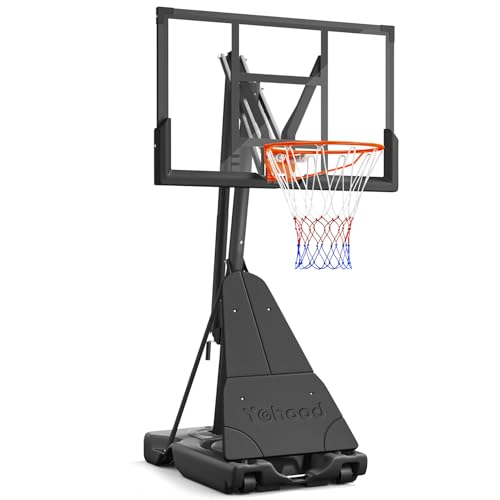
The portable frame is the real point here, especially for a backyard that doubles as a parking spot or party space. The 44 and 48-inch board options give you some room to match the footprint to your setup, and the wheels make it easier to roll than a fixed install. For families that like to change the court layout now and then, that flexibility feels practical rather than flashy.
Compared with the Lifetime combo, this Yohood system is a whole mobile package instead of a parts-focused replacement. The trade-off is predictable, since portability usually asks you to accept a little less permanence in exchange for easier repositioning.
Upsides
- Wheeled base helps with repositioning around the driveway.
- Two backboard sizes give you more setup choice.
- Adjustable height suits mixed-age play sessions.
- Works well for homes that use the space for more than basketball.
Small Caveats
- Portable gear usually needs regular checks on hardware tightness.
- Mobility can mean less of the planted feel you get from an in-ground hoop.
- One thing worth considering is storage room for a wheeled base.
Details At A Glance
Built With In Mind
You fit this best for a family driveway that needs to stay flexible through the week.
Where A Sibling Pick Shines
Lifetime Shatterproof Backboard Rim Combo 48-Inch suits you better when you only need a replacement board and rim, not a rolling system.
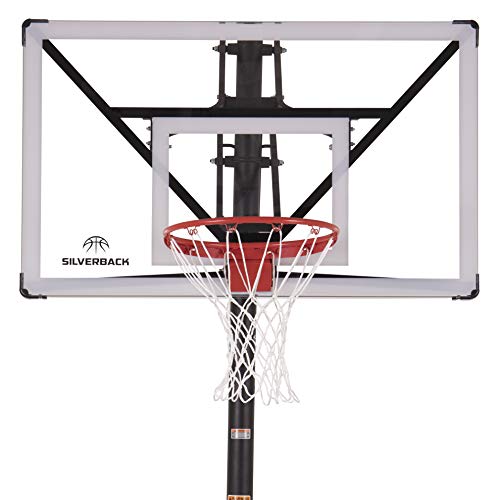
Once you move from portable gear to an in-ground build, the whole setup starts feeling more like a real court fixture. The tempered glass backboard gives this Silverback a cleaner, more traditional look, and the breakaway rim helps absorb force on stronger finishes at the hoop. For long-term home installs, that mix is hard to ignore, though the permanent path also means more planning up front.
It sits well above the portable Yohood options in terms of court presence, and the included pole and backboard pad help round out the install. The honest read is that this is a strong fit for households that want a stable centerpiece and do not need to move the hoop around.
What We Like
- Tempered glass offers a court-like visual and rebound profile.
- Breakaway rim adds a bit of give on aggressive play.
- Height adjustment helps serve mixed ages over time.
- Backboard pad and pole pad add a more finished setup.
- Built for a stable, long-term court location.
Room For Improvement
- In-ground installs take more commitment than portable systems.
- Glass backboards call for careful handling during setup and upkeep.
- You will want a dedicated spot before installation starts.
Core Details
Right Fit For
You fit this best for a permanent home court where stability matters more than easy movement.
Another Choice May Suit
Yohood Basketball Hoop Outdoor Portable 44/48 Inch Backboard 10ft suits you better when you need wheels and a lighter setup footprint.
This awii sport setup gives you a broad height span, which matters in homes where kids and adults share the same hoop. The 40, 44, and 48-inch board options let you tune the visual footprint, while the 4.8 to 10-foot range covers a lot of casual practice use. For mixed-age households, that flexibility often makes the difference between a hoop that gets used and one that just sits there.
Compared with the Silverback in-ground model, this one stays in the portable lane, so you give up some planted stability. In return, you get more room to adjust the setup without committing to a permanent court location.
Best Bits
- Height range supports younger players and taller shooters.
- Board size options help match tighter or wider spaces.
- Portable format keeps the system more adaptable.
- Good fit for driveways that change use throughout the week.
Worth Noting
- Portable builds usually need periodic hardware checks.
- You may want to plan for base space around the driveway.
- Less permanence than an in-ground setup.
Feature Rundown
Who Should Grab It
You fit this best when the same hoop needs to serve different ages without taking over the whole driveway.
Skip It When
Silverback Height Adjustable In-Ground Basketball Hoop suits you better for a fixed court centerpiece with a more planted feel.
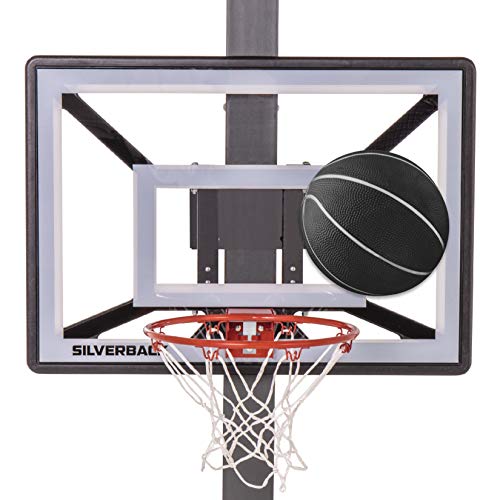
The smaller 33-inch board makes this Silverback feel tuned for tighter spaces and younger players. Lock n Rock mounting is the key detail, because it’s designed to mount to round and vertical poles, which broadens where you can place it. For a youth practice area, that kind of mounting flexibility is more useful than a larger board that eats up wall or yard space.
Compared with the bigger portable systems above, this one is less about family-wide sharing and more about fitting a junior setup neatly. In most backyards, that narrower focus is a strength rather than a compromise.
Positives
- 33-inch size works well in tighter practice zones.
- Mounts to both round and vertical poles.
- Helpful for youth training without a bulky footprint.
- Black finish keeps the look simple and clean.
Softer Spots
- The smaller board gives less visual target area than full-size options.
- Mounting is specialized, so pole fit matters.
- Best for junior use, not a main family court board.
Feature Card
Whose Shelf It Belongs On
You fit this best for a junior setup on an existing pole where space is tight and the target can stay smaller.
Look Elsewhere When
Basketball Hoop 40/44/48 Inch Impact Backboard 4.8-10FT suits you better if the hoop needs to serve kids and adults in one shared space.
TONBUX keeps this one very family-minded, with a 44-inch backboard and a height range that stretches from 4.43 feet to 10 feet depending on how many pole sections you use. That detail matters in a backyard where younger kids want a lower target and older players want regulation-style height. Two wheels also make it easier to roll around than a fixed court setup, which helps in shared outdoor spaces.
Compared with the Silverback junior option, this is the broader household play pick. The trade-off is that mobile convenience usually comes with more parts to keep an eye on, so a little maintenance awareness helps.
Highlights
- 44-inch board fits a broad range of casual play.
- Height range supports both kids and adults.
- Two wheels make repositioning less of a chore.
- Works well in backyards, driveways, and home practice corners.
- Good choice for households that share the hoop.
Areas To Watch
- Portable systems often need occasional tightening and checks.
- More sections can mean more assembly planning.
- You may find the rolling base less planted than an in-ground install.
Quick Facts
Made For
You fit this best for regular driveway play where more than one age group uses the hoop.
Another Choice May Suit
Silverback Height Adjustable In-Ground Basketball Hoop suits you better if you want a more permanent court setup with less movement.
The crank-adjusted height system is the headline here, because it gives you a cleaner way to change the hoop without handling the backboard directly. Yohood pairs that with a 50-inch shatterproof PC board, and PC means polycarbonate, a tough plastic used where impact resistance matters more than a glass-like look. For a serious driveway court, that combination feels thoughtfully put together.
Compared with the Silverback in-ground hoop, this one gives you a different material mix and a more hands-on adjustment style. You may find it especially appealing for a family that wants a durable fixed hoop but still needs easy height changes as kids grow.
Reasons To Buy
- Crank system makes height changes more convenient.
- 50-inch board gives a generous target area.
- Shatterproof PC board suits active outdoor use.
- Solid steel rim adds a sturdier feel at the hoop.
- Good long-term choice for a dedicated court spot.
Points To Note
- In-ground setup asks for a more permanent location.
- Crank-based adjustment adds another moving part to keep an eye on.
- Board material and steel rim can make the unit feel more substantial to install.
Core Details
The Right Fit
You fit this best for a home court that needs a sturdy install with simple height changes.
Where Shoppers Go Wrong
Basketball Hoop 40/44/48 Inch Impact Backboard 5.3-10FT suits you better if you want portable movement instead of a fixed in-ground build.
This awii sport version is close to the earlier portable model, but the 5.3-foot low end gives it a slightly different starting point for younger shooters. The 40, 44, and 48-inch board choices let you scale the setup, and the 10-foot top end still keeps it useful for more standard practice. For a shared driveway, that mix gives you a workable middle ground without forcing a permanent install.
Compared with the 4.8-foot model above, this one begins a bit higher and feels better aligned to households that want a more gradual swing toward full-height play. It is the kind of setup that suits mixed use without asking you to overthink every session.
Best Points
- Multiple board sizes help you match the space.
- 10-foot max height covers standard casual play.
- Portable format suits driveways and shared outdoor areas.
- Works for households where the hoop has several users.
Minor Gripes
- Portable builds still ask for periodic hardware checks.
- The starting height is higher than the 4.8-foot sibling model.
- Not as fixed as an in-ground court centerpiece.
Spec Overview
Who Will Love This
You fit this best for a shared driveway where a flexible portable hoop feels more useful than a fixed court build.
Reach For A Different Pick When
Yohood In Ground Basketball Hoop Outdoor 10FT Adjustable Height suits you better if a permanent install and crank adjustment matter more.
How To Choose The Right Basketball Goal Backboards
Board Size, Mount Style, and Space
Board width shapes the feel of the whole setup. A 33-inch youth board, like the Silverback junior model, fits tighter spaces and pole mounts, while 44, 48, and 50-inch boards give you a bigger visual target for casual practice or family games. The right call depends on how much room you have around the driveway or court edge, because a larger board can crowd a narrow area fast.
Mounting matters just as much. A separate bracket, like the Lifetime combo calls for, suits replacement work, while round and vertical pole mounting opens up more install spots. Permanent in-ground systems need more planning, but they also stay planted in a way portable setups never quite match.
Height Adjustment and Who Uses It
Height range decides how long the hoop stays useful. A system that starts near 4.43 feet and reaches 10 feet, like the TONBUX setup, works well for households with children and adults sharing the same court. Crank adjustment, like on the Yohood in-ground model, gives you a smoother way to change settings than handling the board itself.
Shorter ranges still have a place. Youth-focused hoops usually trade broad adjustment for a cleaner fit around smaller players and smaller spaces, which can be exactly what you need for practice drills or beginner games. A hoop that matches the age range in your home tends to get used more often, and that’s the part that matters.
Material Choices and Everyday Upkeep
Material changes both the look and the maintenance load. Tempered glass brings a more traditional court feel, while shatterproof PC, or polycarbonate, leans toward impact resistance and a lighter maintenance routine. Metal rims and pole padding also influence how the setup handles regular use, especially in homes where the hoop sees daily wear.
Cleaning and checks stay simple on most outdoor setups, but fixed gear still benefits from regular hardware checks and occasional wipe-downs. Portable bases need attention around wheels, joints, and fill stability, while in-ground builds put more of the effort into installation rather than movement. The cleaner the layout you want, the more likely you are to move toward a permanent system.
What To Weigh Before You Click
Hidden Buying Traps
A lot of shoppers focus on board size and miss the mounting story. That leads to compatibility problems, especially with replacement parts or pole-mounted youth boards, so the first step is matching the hoop to the structure already in place. Another easy miss is assuming portable gear will feel the same as a fixed install, which usually leads to disappointment instead of a better game setup.
Storage space also gets overlooked. Wheeled portable systems need room to sit safely, and larger board sizes can make the footprint feel bigger than the product photos suggest. A quick check of your driveway or yard layout saves trouble later.
The Upgrade Payoff
Higher-tier hoops usually cost more because of the board material, the rim style, and the mounting hardware around them. Tempered glass, crank adjustment, pole padding, and heavier support structures all add parts and labor, which is why the premium feel shows up in the build rather than just the size. In this category, you’re often paying for stability, smoother adjustment, and a more court-like experience.
That upgrade makes sense for a dedicated home court or a family that uses the hoop all week. For casual shooting, a simpler portable system can be the smarter call, especially when you want flexibility more than a permanent centerpiece.
Final Thoughts
The right Basketball Goal Backboards depend on how you use the space, not just how large the board looks. Portable picks make sense for shared driveways and changing layouts, while in-ground models fit better for a court you want to keep in place. Youth mounts and smaller boards also matter more than many people expect, especially in tighter yards. Pick the setup that matches your space and your routine, and the hoop will feel like part of the home instead of another thing to manage.
