Book Appointment Now

Best Bike Back Lights for 2026: Safer Night Rides
Bike back lights matter most when traffic is noisy, routes are mixed, and drivers need a clear read on your next move. The five picks below cover very different needs, from rack-mounted signaling to simple clip-on visibility and smart brake sensing. You get a practical range for commuters, weekend riders, and anyone who wants less guessing from the car behind you.
Quick Look At Our Top Picks
PickWhy We Picked ItBest ForAction

Feature Rich
WSDCAM Smart Bike Tail Light for Cargo Rack
Rack mount signaling set
Cargo and utility bikes
Value Pick
Bike Tail Light USB Rechargeable, Super Bright LED Red Back Taillight
Simple wide-angle visibility
Everyday commuting
Performance Leader
ROCKBROS Bike Tail Light Smart, Brake Bicycle Rear Lights Rechargeable
Brake-sensing rear light
Traffic-heavy routes
Design Standout
DARKBEAM Bike Tail Light with LED Display Screen, USB-C Rechargeable
Battery screen and memory modes
Riders who like details

Premium Pick
MagicShine SEEMEE 300/400 Bike Taillight
High-output smart visibility
Night riders and commuters
More Details On Our Top Picks
A cargo bike or utility setup often needs more than a plain red glow, and this WSDCAM unit leans into that need with turn signals, brake-light behavior, and a remote horn-alarm function. The rack-mounted format helps keep the rear end tidy, which matters on bikes already carrying panniers, child seats, or rear cargo boxes.
That broader feature set makes sense for riders who want one rear unit to handle visibility and signaling at once. The trade-off is that more functions usually mean a little more setup and a little more to remember, so it suits you best when you like multifunction gear rather than minimalist kit.
Strong Points
- Turn signals help you communicate lane changes and turns more clearly in traffic.
- Brake-light behavior adds a more obvious cue for drivers behind you.
- The rack mount keeps the light centered and off your seatpost clutter.
- USB rechargeability fits regular commuters who prefer a simple charging routine.
- The alarm and horn functions add practical utility for parked bikes and city stops.
Points To Note
- The added features make this less streamlined than a basic clip-on taillight.
- Rack mounting means it fits utility bikes better than stripped-down road frames.
- Remote-driven controls can take a little familiarization before they feel second nature.
Feature Snapshot
Who It Suits Best
You get the most from this on a cargo bike, family hauler, or utility bike where rack space is available and signaling matters more than keeping things barebones.
Where A Sibling Pick Shines
KEYWELL Bike Tail Light USB Rechargeable makes more sense for a commuter who wants a simpler rear light with broad visibility and less to manage.
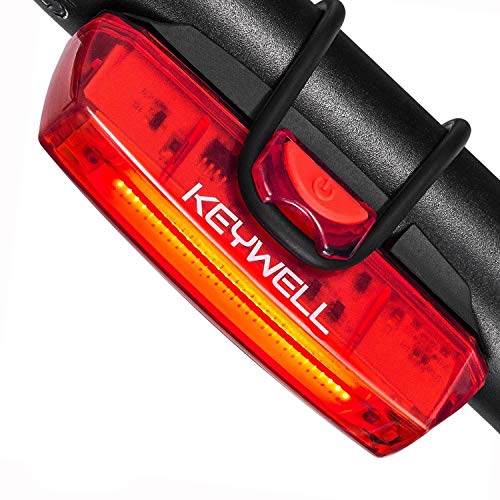
KEYWELL takes a very different route from the WSDCAM unit above, because this one stays simple and light. The 30-LED array and wide red beam are built for visibility, while the clip-on format keeps it easy to move between bikes, helmets, handlebars, or a seatpost.
That kind of flexibility suits everyday commuting, loaner bikes, and mixed setups where you do not want a fixed mount dictating your choices. One thing worth considering is that the more universal the mount system, the more important it is to check fit before assuming every frame tube will feel identical.
What We Like
- Thirty LEDs create a broad rear beam that stands out well behind you.
- The clip-on style makes installation quick on several bike parts.
- Silicone mounts and ring sizes help the light fit different tube diameters.
- USB charging suits daily use without extra battery shopping.
- Its compact shape works well for riders who swap bikes often.
Softer Spots
- Clip-on lights depend on the right fit, so mount choice matters.
- Light memory is useful, but mode-heavy systems can still feel fiddly at first.
- The slim build is convenient, though it gives up the command-center feel of a rack unit.
At A Glance
Built With In Mind
You should feel comfortable choosing this for commuting, casual road rides, or a second bike that needs dependable rear visibility without a complicated setup.
Swap It Out When
MagicShine SEEMEE 300/400 Bike Taillight makes more sense for riders who want a smarter rear light with higher-end visibility behavior and brake sensing.
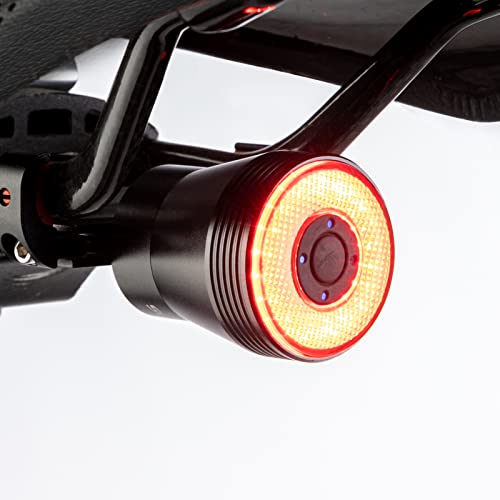
Compared with the simpler KEYWELL unit, ROCKBROS leans into smarter behavior, especially the brake-sensing feature. That gives it a more responsive feel on busy streets, where a brighter rear alert during slowing can help traffic understand what your bike is doing.
The dual-bracket setup matters too, because it opens up fit options around the saddle rail instead of forcing a single installation path. For most road riders and commuters, that flexibility is the real selling point, though you may spend a little longer choosing the cleanest mount position.
Highlights
- Brake sensing adds a stronger visual cue during slowdowns.
- Four light modes give you room to match traffic, daylight, or darker routes.
- USB-C charging is convenient for riders already using modern cables.
- The saddle-rail mount broadens placement choices on performance bikes.
- The smart mode set feels useful rather than decorative.
Areas To Watch
- More advanced behavior usually means more mode management.
- Saddle-rail mounting may take a steadier hand during installation.
- Riders who want a very small, almost invisible light may find this a bit more involved than a basic clip-on.
Core Details
Right Fit For
You should look here if you ride in mixed traffic and want a rear light that responds more actively than a plain always-on unit.
Reach For A Different Pick When
DARKBEAM Bike Tail Light with LED Display Screen is a better match for cyclists who want battery feedback on the unit itself and a more pocket-sized shape.
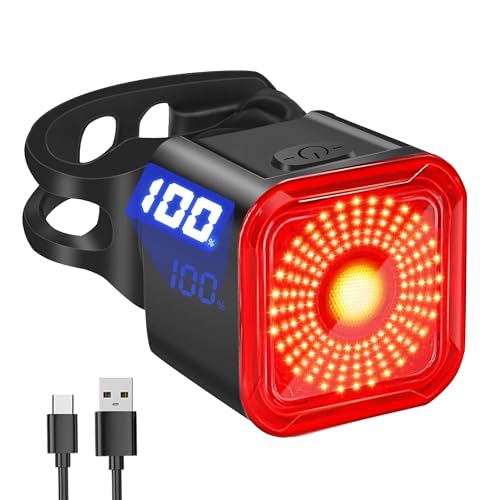
DARKBEAM takes the most information-forward approach in this group, thanks to the LED screen that shows battery level at a glance. That matters on longer commutes or weekend rides, because a rear light that tells you what charge remains is easier to plan around than one that keeps you guessing.
The six memory modes and sleep behavior also make it feel polished in daily use. Compared with ROCKBROS, this one looks a little more focused on convenience and battery awareness, while still keeping the body compact enough to slip into a bag.
Best Bits
- The battery display helps you plan charging before a ride starts.
- Memory modes reduce repeated mode-cycling after each power-up.
- The compact shape is easy to stash in a jersey pocket or saddle bag.
- Brake sensing adds a more visible warning during sudden slowing.
- USB-C charging fits a modern everyday gear setup.
Minor Gripes
- The small display is useful, though it adds one more detail to keep an eye on.
- Sleep-and-wake behavior helps efficiency, but some riders will still prefer the plain simplicity of a basic rear light.
- IP55 protection is solid for general riding, yet wetter conditions call for a careful mounting check.
Details At A Glance
The Right Fit
You will like this most if you commute regularly and want a small rear light that tells you more about battery status than a standard clip-on usually does.
Look Elsewhere When
WSDCAM Smart Bike Tail Light for Cargo Rack is the better call for utility-bike owners who want turn signals and alarm features in a single rear unit.
MagicShine sits at the more advanced end of this list, and the 300-lumen output with differing lens angles shows that focus clearly. The result is a rear light aimed at riders who spend serious time in traffic or on darker roads and want broader visibility than a simple red marker can offer.
The motion sensor and ambient-light behavior are the real draw here, because they let the light react more naturally to braking and changing conditions. Compared with DARKBEAM, this one feels more tuned toward visibility coverage and smart adjustment, though that kind of refinement usually puts it in a higher-effort, higher-attention category.
Reasons To Buy
- 300-lumen output gives you a stronger rear presence for night riding.
- Smart brake sensing adds a noticeable cue during slowing.
- Ambient-light adjustment helps the light respond to changing conditions.
- 360-degree visibility is useful in traffic where side awareness matters too.
- The overall setup suits riders who want a more advanced rear-light experience.
Room For Improvement
- The more advanced behavior will feel like extra complexity to very casual riders.
- Higher-output lights tend to need more regular charging attention.
- Riders who only need a simple commuter light may find the feature set more than they want.
Core Details
Whose Shelf It Belongs On
You should gravitate to this model for night commuting, long mixed-route rides, or any setup where stronger visibility and smarter light response feel worth the step up.
Another Choice May Suit
KEYWELL Bike Tail Light USB Rechargeable fits better for someone who wants a lighter, more straightforward rear light for everyday trips.
How To Choose The Right Bike Back Lights
Start With Your Riding Pattern
Your route matters more than the flashiest feature list. Urban commuters usually benefit from brake sensing, wide visibility, and a mount that stays put through stop-and-go movement, while relaxed neighborhood riders may prefer a lighter clip-on that charges easily and disappears when not in use.
Cargo-bike owners and people carrying kids or groceries often need a rear light that sits cleanly on a rack or saddle rail. That placement keeps the light centered and visible even with bags, panniers, or a rear seat in the picture.
Match The Mount To The Bike
Clip-on lights work well for quick swaps, loaner bikes, and helmets, but they rely on tube shape and fit. Rack mounts and saddle-rail mounts take a little more planning, yet they usually feel more planted on bikes that stay in one setup.
One practical detail gets overlooked a lot, the installation style should match your maintenance habits too. A light you remove often needs simple charging access and easy reattachment, while a fixed rear unit should feel solid enough that you barely think about it again.
Look Beyond Brightness Alone
Brightness helps, but beam shape and visibility angle matter just as much. A wide rear spread can help traffic notice you earlier, and 180-degree or 360-degree visibility matters in lanes where drivers approach from offset angles rather than straight behind.
Mode memory, brake response, and ambient-light sensors add convenience, yet they also add complexity. For riders who prefer simple routines, a plain steady or flashing mode may feel easier, while commuters on busier roads often appreciate the extra cues.
Check Charging And Weather Fit
USB-C charging is handy for people who already carry the same cable for other gear, and it reduces clutter in a bag. Older USB charging is still fine, but the real question is whether the charging routine fits how often you ride.
Water resistance also deserves attention, especially for year-round commuters. A light built for damp weather tends to suit everyday use better than one that only looks good on a dry-day ride.
Before You Click Amazon
Mistakes Worth Dodging
Many shoppers focus on output and skip the mount. That leads to lights that are bright on paper but awkward on a seatpost, rack, or helmet.
Another common miss is buying a feature-heavy model for a simple commute. You can save yourself hassle by choosing the light that matches how much mode switching and charging attention you actually want.
The Upgrade Payoff
Higher-tier lights usually cost more because they add smarter sensing, better visibility shaping, stronger housings, or more flexible mounting hardware. In this category, you are paying for easier daily use as much as for raw brightness.
That upgrade makes sense for long commutes, traffic-heavy roads, and riders who want a rear light that does more than glow. For casual neighborhood rides, a simpler unit often makes more sense and keeps your setup lighter.
Bottom Line
Your best choice depends on how serious your riding gets and how much control you want from the rear light. The WSDCAM and ROCKBROS picks suit riders who want more signaling behavior, while KEYWELL keeps things straightforward. DARKBEAM adds a handy battery screen, and MagicShine goes deepest on smart visibility. Choose the one that fits your bike, your route, and how much attention you want to give the light itself.
