Book Appointment Now

8 Best Hitting Mats for 2026: Smart Options for Real Practice
Good hitting mats take the edge off practice when your garage, backyard, or spare room has to stand in for a range. The right one gives you stable footing, a useful hitting surface, and enough durability to handle repeated swings without turning your setup into a hassle. Some of the picks here suit simple chipping work, while others are built for fuller sessions with added features like ball trays, tees, or swing-path feedback.
Quick Look at the Shortlist
PickWhy We Picked ItBest ForAction
Practical Pick
SAPLIZE Foldable Heavy-Duty Golf Hitting Mat 10mm EVA Backing
Foldable and durable
Portable practice sessions

Heavy Duty Pick
Bltend Golf Mat 36mm 5x4ft/6x4ft
Thicker turf feel
Frequent net practice

Premium Pick
Premium Dual-Turf Golf Mat 5x4ft, 6x4ft
Wide setup flexibility
Backyard range work

Everyday Favorite
Integrated Golf Hitting Mat with Ball Tray
Built-in tee storage
Simple home routines

Feature Rich
Golf Hitting Mats with Swing Path Feedback
Built for correction work
Technique-focused practice
Balanced Choice
CHAMPKEY Premium Synthetic Turf Golf Hitting Mat
Fairway-like turf feel
General practice setups
Performance Leader
Golf Net with Practice Mat 10x7FT
All-in-one backyard setup
Full-flight training space

Editor's Choice
Stride Right Hitting Mat Training System
Batting mechanics training
Youth baseball and softball
More Details On Our Top Picks
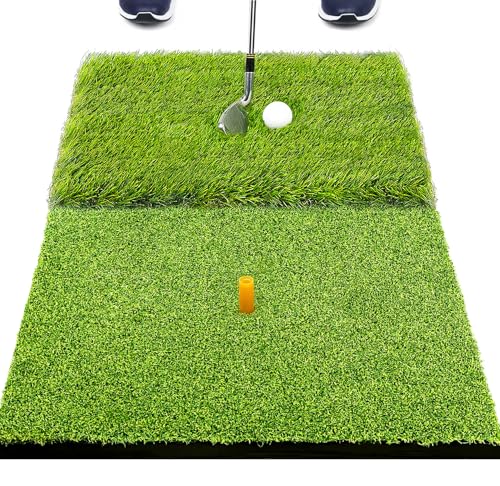
That foldable build makes this SAPLIZE option easier to live with than bulkier mats, especially in a garage or spare room where storage matters. The 10mm EVA backing, which is a foam-style cushioning layer, adds some give underfoot while still keeping the mat grounded for repeated swings.
You get a straightforward setup for swing and chipping work, and that suits golfers who practice in short bursts rather than setting up a permanent bay. The honest trade-off is that foldable gear can feel less planted than thicker, fixed-format mats, so this one fits convenience-first spaces better than hard-core range routines.
Strong Points
- Foldable layout saves storage space between sessions.
- 10mm EVA backing adds a softer standing feel.
- Works indoors or outside without much fuss.
- Useful for chip work and full swings alike.
Points To Note
- Foldable construction can feel less planted than thicker slab-style mats.
- Regular moving and unfolding adds a little setup routine.
Feature Snapshot
Who It Suits Best
Space-conscious golfers who want a mat they can store easily and bring out for routine sessions will get the most from this one.
A Better Fit Elsewhere
Bltend Golf Mat 36mm 5x4ft/6x4ft suits golfers who want a thicker turf feel and a more range-like surface under a net.
The Bltend mat leans into thickness, and that 36mm profile should appeal to golfers who want a firmer, more substantial practice surface. Compared with SAPLIZE’s foldable build, this one is less about portability and more about staying put in a dedicated backyard or simulator spot.
The dense artificial turf and heavy EVA backing point toward a steadier setup for regular sessions with balls and tees. For most home practice areas, that extra structure is the whole point, though it does mean you’re choosing substance over easy storage.
Highlights
- 36mm thickness gives a more substantial underfoot feel.
- Dense turf suits repeated hitting sessions.
- Heavy backing helps the mat stay in place.
- Works well with balls and tees in a home setup.
Small Caveats
- Thicker construction takes more storage space.
- Less convenient for quick carry-in, carry-out use.
Core Details
Who Will Love This
Golfers setting up a semi-permanent practice area and wanting a thicker, more grounded feel will find this one compelling.
Another Choice May Suit
CHAMPKEY Premium Synthetic Turf Golf Hitting Mat makes more sense for someone who wants a simpler package with tees included and a more classic mat setup.
Dual-turf mats usually matter most when you want a little more variety in how the surface behaves, and that seems to be the point here. The 5x4ft and 6x4ft size options give you room to match the mat to a backyard bay, garage lane, or indoor practice corner.
The 21mm to 50mm thickened base range suggests a substantial build, so this pick suits golfers who want a more planted stance and a broader practice footprint. Compare that to SAPLIZE, and you get a less portable but more permanent-feeling setup.
Reasons To Buy
- Dual-turf design offers more than one hitting feel.
- Multiple size choices help with space planning.
- Thickened base supports a steadier stance.
- Fits backyard and indoor routines well.
Areas To Watch
- Thicker build is harder to tuck away after practice.
- More substantial mats usually make more sense in dedicated spaces.
Details At A Glance
Best Suited To
Golfers who want a larger-feeling practice station with more surface variety will appreciate this one most.
Look Elsewhere When
Likewise, Bltend Golf Mat 36mm fits better for someone who wants a clearly defined thick-turf option without the extra size choice.
A built-in ball tray changes the rhythm of a practice session, because your balls and tees stay close instead of rolling around the floor or grass. That kind of setup helps in a garage bay or backyard lane where you want less interruption between swings.
The thickened artificial turf and included three tees make this a tidy, practical choice for people who value a ready-to-use feel. It does not chase the thickest base in this group, though, so golfers wanting a heavier stance may still prefer Bltend or the Premium Dual-Turf mat.
What We Like
- Ball tray keeps practice supplies organized.
- Included tees reduce extra setup.
- Thickened turf supports routine home practice.
- Convenient for short, repeated sessions.
Room For Improvement
- Accessory-focused design may matter less to minimalists.
- Practice area still needs enough room for the tray layout.
Quick Facts
Made For
Home golfers who want a cleaner, more organized practice station will get the most value from this layout.
Where A Sibling Pick Shines
CHAMPKEY Premium Synthetic Turf Golf Hitting Mat fits better for someone who wants a cleaner mat-only setup with a strong turf feel and tee bundle.
The swing-path feedback angle makes this mat stand out for golfers focused on mechanics rather than just putting swings into a net. Three replaceable training mats and a heavy rubber base point to a setup that can handle repeated drills without feeling barebones.
For a garage or training corner, that combination works well because you can build a repeatable routine around the same platform. The trade-off is that feature-rich gear asks more of your attention, so it suits correction-minded practice better than casual weekend swings.
Best Bits
- Swing-path feedback adds a useful training cue.
- Three replaceable mats extend the practice setup.
- Rubber base supports steadier placement.
- Good match for drill-based repetition.
Trade Offs
- Extra training features matter less for casual hitters.
- Replaceable parts add a little more upkeep.
Feature Rundown
Whose Shelf It Belongs On
Golfers who want a drill-first mat and like getting feedback from the setup itself will gravitate toward this one.
Swap It Out When
Integrated Golf Hitting Mat with Ball Tray is the better fit for someone who values simple organization more than swing-path cues.
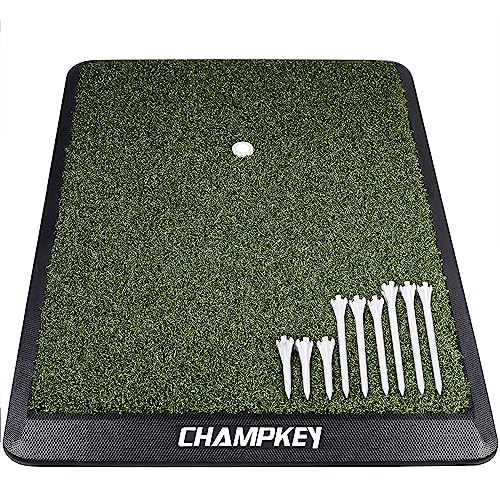
CHAMPKEY keeps the pitch simple, with a synthetic turf surface and a heavy rubber base that should feel familiar to most home practice spaces. The included tee bundle helps right away, so you don’t have to round up extra accessories before starting a session.
The 16 mm true-turf surface is meant to mimic fairway or tee-box contact, which makes this a sensible bridge between casual mats and more specialized trainers. Compared with the feedback-heavy LYDARZ mat, this one is easier to live with and less focused on correction, which many golfers will appreciate.
Positives
- 16 mm true-turf surface feels purpose-built for practice.
- Heavy rubber base helps the mat sit securely.
- Comes with one rubber tee holder and nine plastic tees.
- Works well as a straightforward everyday training mat.
Softer Spots
- Less training feedback than more specialized mats.
- Best suited to classic practice rather than drill-heavy work.
Core Details
Right Fit For
Golfers who want a familiar mat feel, steady footing, and a simple accessory bundle will get along with this one.
Another Choice May Suit
LYDARZ Golf Hitting Mats with Swing Path Feedback is the smarter match for someone who wants a more instructional training setup.
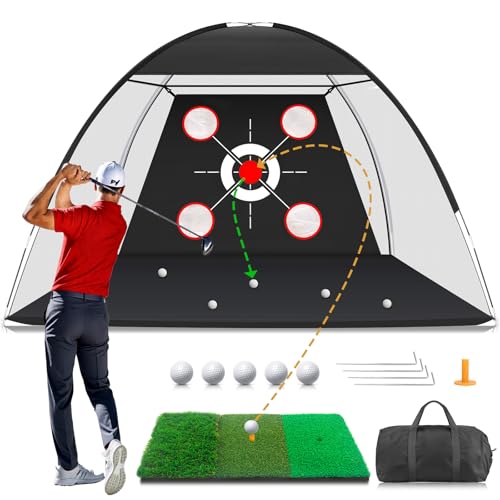
This one stretches beyond a mat-only setup, because the 10x7FT net gives your shots somewhere to go instead of stopping at the hitting surface. For backyard practice, that changes the entire routine, especially for golfers working on driving, chipping, and swing repetition in the same space.
The all-in-one layout fits families or home golfers who want a dedicated training corner without piecing together separate gear. The catch is obvious, though, it asks for more room than the mat-only options in this list, so compact patios may feel tight.
Bright Spots
- Net and mat together create a fuller practice station.
- 10x7FT format suits backyard use.
- Covers driving, chipping, and swing work.
- Keeps practice self-contained at home.
Worth Noting
- Needs more space than a standalone mat.
- Setup and storage take more effort than a single-piece option.
At A Glance
Built With In Mind
Golfers with enough outdoor space for a fuller training station will find this setup more useful than a mat alone.
Reach For A Different Pick When
CHAMPKEY Premium Synthetic Turf Golf Hitting Mat makes more sense for a smaller practice area where a standalone mat is easier to manage.
Stride Right stands apart from the golf-focused picks because it’s built for baseball and softball batting work, not club practice. The included 4×6.5-foot hitting mat, visual mechanics guide, and video coaching access make it feel more like a structured training system than a bare surface.
That matters most for youth players who need a clearer stance, stride, and setup routine, especially during repeat work in a driveway or open training area. Compared with the golf mats above, this is a different sport entirely, so it belongs with families looking for batting instruction rather than golf swing repetition.
What We Like
- Includes a 4×6.5-foot hitting mat for batting drills.
- Visual guide gives setup and stance direction.
- Video coaching access adds a teaching layer.
- Useful for repeatable baseball or softball mechanics work.
Things To Consider
- Built for baseball and softball, not golf practice.
- Instructional focus suits players who want guided drill work.
Feature Card
The Right Fit
You’ll get the most from this system if you’re looking to support a youth hitter’s mechanics with structure and guidance.
Skip It When
MFNMFN Golf Net with Practice Mat suits golf-only practice far better, especially for someone who wants backyard drives and chipping instead of batting drills.
How To Choose The Right Hitting Mats
Surface Feel And Training Goal
The surface should match the kind of practice you actually do. Thicker turf and heavier bases suit fuller swings and repeated contact, while simpler mats work well for chipping or shorter practice bursts in a garage or basement.
Think about whether your priority is comfort, feedback, or space efficiency. A feedback-focused mat like LYDARZ serves correction work, while a simpler mat like SAPLIZE makes storage easier after the session ends.
Size, Storage, And Placement
Mat size matters more than many shoppers expect, because a larger mat can feel great until you try to move it through a narrow doorway. A 5x4ft or 6x4ft layout is easier to place in a backyard lane, while foldable builds suit apartments, shared spaces, and smaller sheds.
The placement question is practical, not glamorous. You want enough room for your stance, follow-through, and a little margin around the edges so the mat doesn’t feel cramped.
Base Material And Stability
Rubber and EVA backing change how planted the mat feels underfoot. Rubber tends to suit heavier, more permanent setups, while EVA adds a softer layer that can be easier on joints and floor surfaces during routine practice.
That trade-off shows up most in places with slippery concrete or uneven grass. Bltend and CHAMPKEY lean into steadier, denser foundations, while SAPLIZE offers more convenience for quick setup and storage.
Extra Features Versus Simplicity
Some mats stop at the surface, and that’s fine for golfers who just want reps. Others add ball trays, tees, replaceable inserts, or swing-path cues, which can make practice feel more structured and less scattered.
Those extras matter most when you practice often and want fewer interruptions. They matter less when your main goal is a quick warm-up before a round or a short evening session after work.
What To Weigh Before You Choose
Common Shopping Slip Ups
A common mistake is matching the mat to the space, not the swing. A thick, wide setup can sound appealing, then become awkward in a garage where every inch counts.
Another miss is overlooking what kind of practice you do most. A mat built for feedback or batting instruction can feel unnecessary, while a plain surface may feel too bare for someone chasing mechanics work.
Where The Extra Money Goes
Higher-tier mats usually spend the budget on thicker base layers, denser turf, larger dimensions, or added training pieces like trays and tee bundles. That gives you a steadier feel and, in some cases, a more repeatable practice routine.
The upgrade makes sense for golfers who log frequent sessions or want a more permanent home bay. Casual practice, though, often works fine with a simpler mat that stores easily and still gives a solid strike surface.
Final Thoughts
The right mat depends on how serious your practice space is, not just how polished the listing looks. SAPLIZE and CHAMPKEY make sense for straightforward home use, while Bltend and the Premium Dual-Turf option suit more committed setups. Add LYDARZ, Ponsonbay, MFNMFN, or Stride Right only when the extra features or different sport match your real routine. Pick the one that fits your space first, and the rest usually falls into place.
