Book Appointment Now

8 Best Pitching Machines for 2026: Smart Choices for Practice
Pitching practice gets easier when the machine matches the space, skill level, and session length you actually have. Some models are built for simple toss drills in a backyard, while others are better for steady batting practice, field work, or mixed training days. The right fit can save setup time, reduce frustration, and keep reps moving at a pace that feels useful instead of chaotic.
Quick Look At The Shortlist
PickWhy We Picked ItBest ForAction

Practical Pick
Furlihong 898BH Baseball Soft Toss Machine
Mechanical simplicity
Backyard toss drills

Balanced Choice
Heater Sports Slider Lite 360 Baseball Pitching Machine
360-degree delivery
All-around practice

Performance Leader
Heater Sports Power Alley Lite 360 Baseball Pitching Machine
Wide speed range
Varied pitch work

Top Pick
Furlihong 388BH Baseball Pitching Machine
Portable beginner setup
Newer players

Everyday Favorite
Furlihong 380BH Baseball Pitching Machine
Starter-friendly bundle
Kids and beginners
Feature Rich
Furlihong Upgraded Electronic Baseball Pitching Machine
Flexible power options
Low-level drills

Premium Pick
Junior Hack Attack Baseball Pitching Machine
Serious training control
Advanced young athletes

Reliable Runner Up
Heater Power Alley Pro Real Baseball Machine
Real-ball practice
Batting and field work
More Details On Our Top Picks
The 898BH keeps things simple in a way that makes sense for backyard reps. A foot paddle releases the toss, so you are not tied to a power cord, and the three angle settings give you room to adjust for different ages or drill styles.
That mechanical setup also changes the maintenance story, because fewer electrical parts usually mean fewer failure points over a long season. Trainers running repeat toss work and families who want a low-fuss setup will appreciate that, though loading still takes attention and the pace is better suited to controlled practice than hectic cage work.
Strong Points
- No outlet needed, so you can place it where the drill makes sense.
- Foot-step release keeps the motion predictable for soft toss work.
- Three angle settings help different skill levels use the same machine.
- Mechanical design should suit regular seasonal use better than a circuit-heavy setup.
- Extra stackers can extend ball capacity, which saves trips back to reload.
Points To Note
- The pace is built for controlled toss sessions, not fast, automated feeding.
- Manual loading still matters, so it asks for a bit more hands-on attention.
- Its value depends on whether you want a simple toss tool or a more advanced pitching system.
Technical Sheet
Who It Suits Best
Coaches, parents, and newer players who want a simple toss routine in a backyard or practice lane will get the most from it.
Where A Sibling Pick Shines
Furlihong 388BH is a better fit for a beginner who wants a battery-powered setup and bundled balls right away.
This model leans into repeatable ball placement, which matters more than flashy speed for many training sessions. The 360-degree delivery and automatic feeder make it easier to keep a session moving, especially for batting reps where rhythm matters.
Compared with the Furlihong 898BH, you are getting a more automated feel, so the trade-off is less hands-on simplicity and more dependence on its feeding setup. That mix suits coaches and families who want a steadier flow for mixed-age use, though portable gear like this still rewards careful setup and storage.
What We Like
- 360-degree delivery gives you wider placement options for practice variety.
- Automatic feeding reduces pauses between reps.
- The compact, portable design is easier to move between practice spots.
- Useful for all-ages training, which helps a family use one unit across skill levels.
Room For Improvement
- Automated feeding brings more parts to manage and store carefully.
- The more feature-rich layout can feel like extra machine for very casual toss sessions.
- Session flow depends on proper setup, so rushed prep can get in the way.
Feature Snapshot
Who Should Grab It
Coaches and home-practice setups that need steady repetition without constant resetting will get the most from it.
A Better Fit Elsewhere
Heater Power Alley Pro Real Baseball Machine suits you better when real baseballs and a tighter speed ceiling matter more than broad feeding convenience.
The wider speed range makes this one feel more tuned for players who want to work on timing as well as pitch recognition. Since it throws lite balls and covers fastballs, sliders, and curves, it gives you more variation than the Slider Lite 360 without jumping into the heavier real-ball category.
That said, the best fit depends on your practice plan, because lite-ball training is useful for repetition but not a straight substitute for every real-game rep. For batting cages, defensive drills, and front-yard sessions, it offers a strong middle ground, though the product page also notes a third-party seller arrangement.
Highlights
- 40 to 80 MPH range gives you room to work through different timing windows.
- Fastball, slider, and curve options add useful pitch variation.
- Lite-ball format helps keep practice manageable for smaller spaces.
- Portable construction makes it easier to move for field or batting work.
Small Caveats
- Lite balls change the training feel, so it suits practice reps more than game-simulation purists.
- Third-party seller status can make the shopping experience feel less straightforward.
- Ball type and machine care both matter, so storage discipline pays off.
Core Details
Best Suited To
Developing hitters and practice setups that want more pitch variety without moving into a pro-style machine make the most sense here.
Look Elsewhere When
Junior Hack Attack fits better for advanced young athletes who want deeper pitch placement control and standard-baseball handling.
The 388BH looks built for newer players who need a forgiving way to learn timing and contact. It runs from a power bank or battery, and the included nine training balls make the out-of-box setup more complete than a bare machine.
Compared with the Furlihong 898BH, this one trades away the no-power simplicity for portability and a more starter-friendly bundle. The honest read is that beginners and family drills benefit most, while more advanced hitters may want something with a broader pitch ceiling.
Upsides
- Battery or power-bank operation makes placement more flexible.
- Angle controls help tailor the launch path for younger hitters.
- Nine training balls add useful starter value right away.
- The setup feels suited to early-stage practice rather than advanced overload.
Areas To Watch
- It is aimed at beginner-level use, so advanced training demands may outgrow it.
- Battery-style setups need routine charging planning.
- Training balls and machine parts both deserve tidy storage after sessions.
Details At A Glance
Whose Shelf It Belongs On
Families, beginners, and coaches running early-stage drills will get the most useful fit here.
Swap It Out When
Heater Sports Power Alley Lite 360 is the stronger choice for hitters who want more speed range and pitch variety.
This one leans into easy entry for kids and new players, especially because it comes with a bat and a dozen training balls. The stated 20 MPH speed and Furlihong plastic balls are a friendlier match for early contact work than faster, more demanding machines.
That softer pace also means the machine is less about advanced pitch development and more about confidence-building reps. For a driveway, garage lane, or backyard net, it is a sensible starter bundle, though the plastic-ball format is the main trade-off you accept for that gentler setup.
Best Bits
- Battery power keeps the setup usable in spots without outlets.
- Included bat and twelve training balls make the package feel complete.
- 20 MPH output suits early swing timing and basic contact work.
- Plastic balls are designed for sting reduction and kinder bat contact.
Minor Gripes
- The slower pace is a plus for beginners, but it will not satisfy more advanced hitters for long.
- Plastic training balls change the feel from standard baseball reps.
- Bundle items need their own storage space, which matters in smaller garages.
Feature Rundown
The Right Fit
Kids, first-time hitters, and families building a simple backyard routine are the best match here.
Reach For A Different Pick When
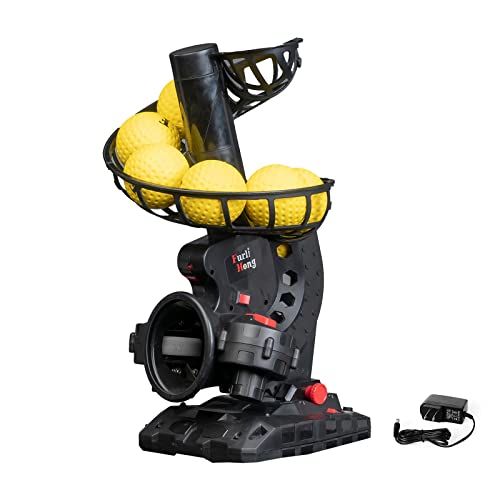
Furlihong Upgraded Electronic Baseball Pitching Machine suits you better once you want adjustable speed and more pitch shape control.
The adjustable wheels make this one more adaptable than the simpler Furlihong models above it, because speed and angle both move with the drill. It comes with eight dimpled balls, and the AC adapter or battery power option gives you flexibility for a garage cage or a field-side session.
That kind of setup is especially useful for lower-level batting and fielding practice where you want a bit more control without stepping into a heavy-duty machine. One thing worth considering is that the extra adjustment range asks for more learning, so casual users may take a little time to dial it in.
Bright Spots
- Speed and angle both adjust, which gives you more drill control.
- AC adapter or battery power broadens where you can use it.
- Fastball, curve, and slider shaping support varied practice sessions.
- Eight included dimpled balls help you start without piecing together extras.
Worth Noting
- The wider feature set takes more time to understand than a basic toss machine.
- Dimpled balls change the training feel, so the practice mode is specific.
- As with most adjustable machines, clean storage helps keep settings and parts in better shape.
Core Details
Built With In Mind
Low-level players, coaches, and families who want flexible practice control will get the most from it.
A Better Fit Elsewhere
Junior Hack Attack is the stronger step up for serious young athletes who need deeper pitch placement control and standard baseball feeding.
This machine sits in a different lane from the Furlihong options, because it is clearly built for serious training control. It handles standard baseballs, reaches up to 70 MPH, and can throw a wide set of pitches, including left- and right-handed fastballs, curveballs, sliders, split-finger pitches, and knuckleballs.
The head also pivots for defensive work, so you can use it for ground balls, line drives, and fly balls out to a stated 250 feet. That range makes sense for a program that wants one machine to handle more than simple batting reps, though the extra capability is more machine than most casual backyard sessions need.
Reasons To Buy
- Wide pitch mix supports advanced recognition and timing work.
- Standard baseball compatibility makes training feel more game-like.
- Up to 70 MPH gives serious young athletes room to progress.
- Quick head movement helps cover batting and defensive drills in one setup.
- Control over pitch location helps coaches shape targeted sessions.
Softer Spots
- The level of control is excellent, but it is more machine than a beginner usually needs.
- Serious training gear asks for more space, planning, and care in storage.
- Its strength is precision work, so casual play use may feel like overkill.
Quick Facts
Perfect Match For
Advanced young athletes, travel-team programs, and coaches who need precise pitch control will get the strongest fit here.
Another Choice May Suit
Heater Power Alley Pro Real Baseball Machine is the easier choice for real-ball practice when you want a simpler, less advanced setup.
Real baseball practice changes the feel immediately, and that is where this machine finds its place. It pitches real balls up to 45 MPH and keeps an adjustable design, so it works for batting, pitching, and field sessions without asking you to shift into lite-ball training.
Compared with the Junior Hack Attack, this is the simpler route for players who want real-ball reps without stepping into the more advanced control set. In most backyard or training-lane setups, that trade-off feels reasonable, though the speed ceiling and feature set are more modest than the premium machine above.
Standout Traits
- Real baseball compatibility makes the training feel familiar.
- Adjustable design supports several practice modes.
- 45 MPH top speed fits many batting and fielding drills.
- Useful for mixed sessions where one machine needs to do several jobs.
Honest Caveats
- The speed range is more modest than the premium training model in this lineup.
- It is a practical machine, not the most feature-dense option here.
- Real baseball use means you should keep balls and storage space organized.
Feature Card
Who Will Love This
Hitters and coaches who want a straightforward real-ball machine for everyday practice will get the best match here.
Consider Something Else When
Junior Hack Attack is the better step-up for advanced athletes who need more pitch types and greater training control.
How To Choose The Right Pitching Machines
Start With The Ball Type
Ball type shapes the whole training feel. Lite balls are easier to manage in smaller spaces and often feel friendlier for early reps, while real baseballs make practice closer to game conditions.
That difference matters more than a lot of shoppers expect, because a machine built around lite balls can behave very differently from one built for standard baseballs. For mixed-age households, a gentler ball choice often keeps practice moving longer.
Match Speed And Pitch Variety To Skill
Speed is only useful when it matches the hitter in front of the machine. A lower ceiling helps beginners build timing, while a wider range matters more once a player starts tracking fastballs, curves, or sliders with confidence.
Pitch mix works the same way. Simple toss machines help with rhythm, but machines that can vary placement and pitch shape give more value to coaches running structured sessions.
Think About Power And Placement
Battery power, AC adapters, and no-power mechanical designs each solve a different problem. Battery and power-bank models help in parks or side yards, AC-powered units suit fixed practice spaces, and manual systems remove cord concerns altogether.
Placement also affects storage and setup. Compact gear is easier to move, but heavier control-focused machines usually ask for more space and more careful handling between sessions.
Choose For The Kind Of Practice You Run
A soft toss machine fits repetition and hand-eye work. An automated feeder helps when you want uninterrupted batting reps, and a more advanced pitching machine earns its keep when batting, fielding, and pitch recognition all matter in the same week.
The honest read is simple, the best match is the one that fits your actual routine, not the most complex spec sheet. That keeps your practice useful instead of fussy.
What To Weigh Before You Commit
Common Shopping Slip Ups
Many people start with speed and forget the ball type. That can lead to a machine that looks exciting on paper but feels wrong for the age group or drill space.
Another common miss is ignoring setup and storage. A machine that looks compact online can still be awkward in a garage, especially with extra balls, chargers, or moving parts to keep together.
Why Top Tier Costs More
Higher-end machines usually charge more because they add pitch control, stronger feeding systems, and broader drill coverage. You are paying for consistency and range, not just a metal frame with a motor.
That upgrade makes sense for coached programs, travel teams, and serious young athletes who need more than a simple toss or a single speed. For casual backyard use, the extra money can be hard to justify.
Closing Thoughts
The right machine depends on how you practice, not just how much control sounds impressive. Furlihong gives you approachable options for newer players and flexible home use, while Heater and Sports Attack cover the more advanced end of the lane. Match the machine to the ball type, speed range, and space you actually have, and you will end up with gear that stays useful instead of gathering dust.
