Book Appointment Now

Golf Training Tips for Lowering Your Handicap
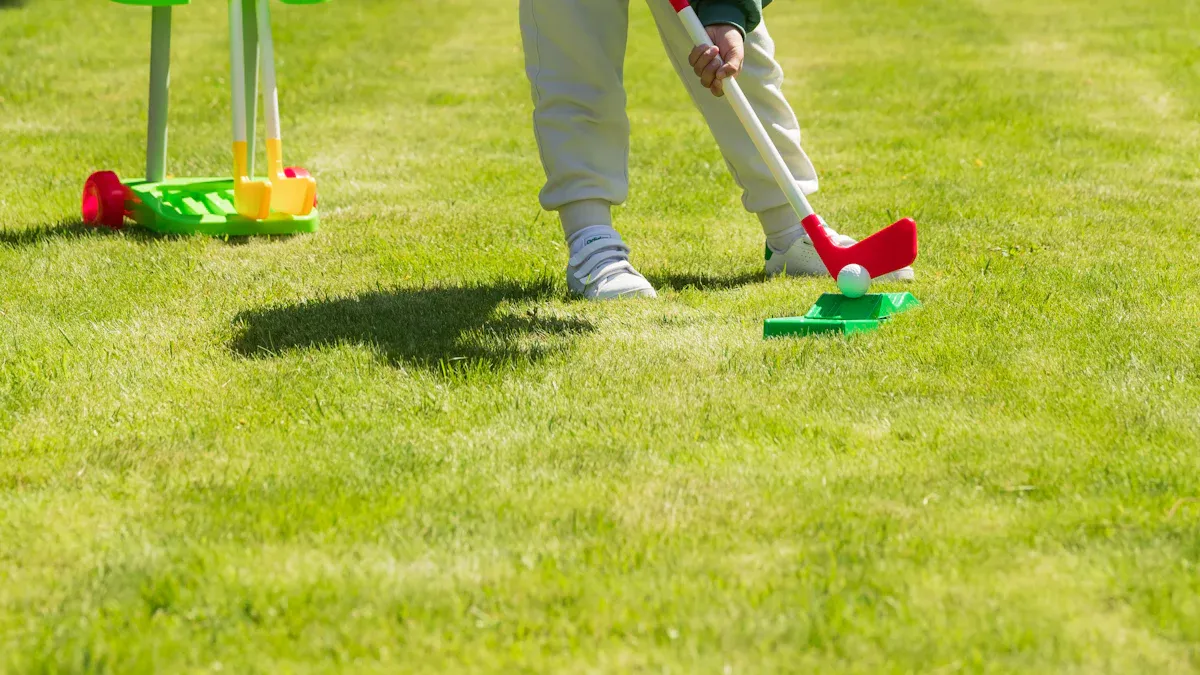
Golf isn’t just a game; it’s a journey towards improvement. Lowering your handicap requires dedication, consistent practice, and the right strategies. By incorporating effective Golf Training Tips, you can enhance your skills and enjoy the game more by focusing on specific areas of your game. So, get ready to adopt a proactive approach to your training and watch your game transform!
Key Takeaways
Assess your current golf skills to identify strengths and weaknesses. Use self-assessment tools and technology for accurate insights.
Focus on improving your short game. Mastering chipping and putting can significantly lower your scores.
Establish a structured practice routine. Aim for 3-4 practice sessions a week with clear goals for measurable improvement.
Incorporate mental strategies like visualization and mindfulness. These techniques enhance focus and performance during rounds.
Track your progress with a golf journal. This practice helps you identify patterns, set goals, and stay motivated.
Understanding Your Game

Assessing Skills
To improve your golf game, you first need to assess your current skills. This self-assessment helps you understand where you stand and what areas need improvement. Here are some effective methods to evaluate your skills:
Compare your performance across different handicaps. This comparison gives you insights into your strengths and weaknesses.
Analyze various aspects of your game, such as driving distance, accuracy, and putting. This analysis enhances your practice efficiency.
Use technology to your advantage. Tools like swing analysis software can provide immediate feedback on your performance.
You might consider using specific tests to assess your physical abilities. For example:
Overhead Deep Squat: This test checks your mobility in crucial areas like hips and shoulders, which are vital for a proper swing.
Open Books Arm Bent Test: This evaluates the flexibility of your chest and upper spine, important for the rotational movement in your swing.
Identifying Weaknesses
Once you’ve assessed your skills, the next step is identifying your weaknesses. Many golfers with handicaps above 18 often struggle with:
Inconsistent chipping
Shaky putting under pressure
Missing fairways
Recognizing these weaknesses allows you to focus your practice sessions on specific areas that need improvement.
You can also utilize self-assessment tools to pinpoint your weaknesses. For instance, the Golf Mental Skills Assessment evaluates your mental game across eight key areas. This tool provides a personalized plan for improvement, helping you develop positive mental habits.
Additionally, technology can assist in identifying skill gaps. Here’s a quick look at some tools that can help:
Technology | Key Features | Benefits for Skill Gap Identification |
|---|---|---|
Golf VX | Visualizes swing dynamics, provides immediate feedback | Helps you understand your swing path and make informed adjustments. |
Trackman | Measures spin rate, launch angle, and ball flight characteristics | Enables precise adjustments to optimize performance and identify weaknesses. |
Gears | Analyzes swing biomechanics with high detail, tracking over 600 images per swing | Offers comprehensive data on swing mechanics, revealing areas for improvement. |
By using these tools, you can become aware of your current swing tendencies and focus on one aspect at a time for targeted practice. Analyzing data helps you identify patterns and make informed adjustments, ultimately leading to lowering your golf handicap.
Training Tips for Lowering Your Handicap

Short Game Focus
Improving your short game is crucial for lowering your handicap. Many golfers overlook this aspect, but mastering it can significantly impact your scores. Here are some effective drills to enhance your short game:
Use a pitching wedge or high-lofted club based on your lie.
Keep your chest moving toward the target to maintain proper body movement.
Focus on a landing spot on the green instead of the pin. This helps you visualize your shot better.
Practice a bump and run to keep the ball low, especially in windy conditions.
Mastering the short game simplifies your shots. By focusing on using the lowest loft possible, you can achieve more predictable and controlled shots. This approach minimizes errors and enhances consistency, which is key to lowering your scores.
Practice Routines
Establishing a structured practice routine is essential for improvement. Here’s a breakdown of how often you should practice to see measurable results:
Practice Type | Frequency | Duration |
|---|---|---|
Putting practice | Daily | 15 minutes |
Chipping and pitching | Twice weekly | 30 minutes |
Full swing practice | Once weekly | 45 minutes |
Golf round with stats | Weekend | 1 round |
Practicing 3-4 times a week with clear goals can lead to noticeable improvement in your handicap within a few months. Structured sessions focused on specific areas, like your short game and full swing, are more effective than unstructured practice.
Incorporating technology can also enhance your practice. Swing analysis tools can provide valuable feedback on your golf swing. A study showed that as players’ swings improved to align more closely with professional standards, their handicaps decreased significantly. This correlation highlights the importance of using technology to refine your skills.
By following these training tips and focusing on your short game, you’ll be well on your way to lowering your handicap. Remember, consistent practice and a targeted approach are your best allies in this journey.
Mental Game Strategies
Visualization Techniques
Visualization is a powerful tool in golf. It helps you create a mental picture of your shots, boosting your confidence and focus. Here’s how to effectively use visualization:
Picture Your Shot: Before you swing, visualize the entire process. Imagine the trajectory, landing spot, and how the ball will interact with the ground. This mental rehearsal can enhance your performance.
Focus on Details: Think about the wind direction, hazards, and your intended launch direction. The more specific you are, the better prepared you’ll be.
Practice Regularly: Incorporate visualization into your routine both on and off the course. This practice activates the same neural pathways as actual performance, improving muscle memory.
Research shows that golfers who use visualization techniques often see improvements in their scores. A study found that participants who visualized their swings demonstrated better kinematics and performance scores. This indicates that mental preparation can lead to lower golf scores.
Staying Focused
Maintaining focus during a round is crucial. Here are some strategies to help you stay present:
Develop a Pre-Shot Routine: This routine helps clear your mind and prepares you for each shot. It can include deep breaths, practice swings, and visualizing your shot.
Stay in the Moment: Concentrate on the shot at hand. Avoid dwelling on past mistakes or worrying about future holes.
Practice Mindfulness: Mindfulness techniques can help you remain calm and focused, especially in high-pressure situations. Consider meditation for a few minutes daily to train your brain to concentrate.
Using these strategies can enhance your focus and performance. Remember, staying present allows you to manage pressure and stress effectively. By setting mental goals and practicing emotional regulation, you can sharpen your focus and maintain consistency throughout your game.
Incorporating these mental game strategies into your training can significantly impact your performance on the course. With practice, you’ll find that a strong mental game complements your physical skills, leading to a lower handicap.
Physical Fitness for Golf
Strength and Flexibility
To enhance your golf game, focusing on strength and flexibility is essential. These elements improve your swing mechanics and help prevent injuries. Here are some effective exercises to consider:
Exercise | Focus | Targeted Areas |
|---|---|---|
Banded rotations | Activate rotational muscles | Lumbar, Traps |
Band pass | Improve shoulder mobility | Shoulders, Pecs |
Double external shoulder band rotations | Prepare external rotators | Shoulders, Rotators |
Good morning with band | Engage posterior chain | Hamstrings, Lumbar |
Incorporating these exercises into your routine can lead to better performance on the course. Improved strength and flexibility allow you to generate more power in your swings and maintain better control over your shots.
Tip: Many golfers notice that as they integrate fitness into their training, they experience improved swings and lower scores. This correlation highlights the importance of physical fitness in golf.
Endurance Training
Endurance is another critical aspect of your physical fitness. It helps you maintain performance throughout a round, especially during long tournaments. Here are some recommended endurance training methods:
Exercise | Description | Benefits |
|---|---|---|
Medicine Ball Rotational Throws | Stand sideways a few feet from the wall with a medicine ball. Twist and throw the ball at the wall. | Targets obliques, lower back, and hips, building endurance for repeated swings. |
Bodyweight Squats | Position feet shoulder-width apart and sit back as if in a chair. | Builds lower body strength and endurance, stabilizing you during play. |
Plank Variations | Perform a forearm plank with shoulder taps. | Enhances core and upper body endurance, maintaining posture throughout the game. |
Walking Lunges | Hold dumbbells and step forward into a lunge. | Develops muscular endurance in legs, crucial for walking the course. |
Additionally, staying hydrated and snacking during your game can help maintain energy levels. Regular cardiovascular exercises also enhance stamina, preventing fatigue that may lead to decreased swing precision and power.
By focusing on strength, flexibility, and endurance, you’ll find that your overall performance in golf improves significantly. This holistic approach to fitness not only lowers your handicap but also makes the game more enjoyable.
Progress Tracking
Keeping a Golf Journal
Keeping a golf journal can be a game-changer for your performance. It helps you manage the overwhelming information that comes with playing golf. By jotting down your thoughts and experiences, you can clear your mind and focus on your game. This practice leads to better performance and consistency. Here are some benefits of maintaining a golf journal:
Benefit | Description |
|---|---|
Data-Driven Improvement | Helps identify strengths and weaknesses through recorded metrics like fairway hits and putts. |
Enhanced Focus | Encourages mindfulness of performance, revealing patterns that may go unnoticed. |
Goal Setting | Facilitates setting realistic goals based on data, boosting motivation and improvement. |
Increased Self-Awareness | Cultivates understanding of how various factors affect performance. |
Reduced Anxiety | Alleviates pressure by allowing focus on specific areas rather than the entire game. |
Positive Reinforcement | Celebrates successes, fostering a positive mindset and resilience. |
Top amateur and professional golfers often use journals to track their mistakes and lessons learned. They view errors as feedback, adjusting their practice routines and mental strategies accordingly. This approach builds resilience and confidence, making it easier to learn from each round.
Setting SMART Goals
Setting SMART goals is crucial for your improvement in golf. This framework ensures your goals are Specific, Measurable, Achievable, Relevant, and Time-Bound. Here’s how it works:
SMART Criteria | Description | Example |
|---|---|---|
Specific | Targets one skill or outcome | Improve driving accuracy on par fours and fives by hitting eight of 14 fairways per round. |
Measurable | Criteria to monitor advancement | Increase fairway hit percentage from 60% to 70%. |
Achievable | Practical and realistic goals | Break 85 in three months if currently shooting in the high 90s. |
Relevant | Goals that support personal objectives | Improve scrambling percentage from 40% to 55%. |
Time-Bound | Setting a deadline for goals | Achieve a 5-stroke reduction in average score within 6 months. |
By setting specific, measurable goals, you can concentrate on critical areas of your game. Instead of saying, “I want to improve my short game,” aim for something like, “I want to reduce three-putts by 20%.” This clarity allows you to track your progress effectively and make necessary adjustments.
Regularly reviewing your performance against these goals can maximize your improvement. Reflecting on your discipline and processes after each round leads to better outcomes. Embrace a process-oriented mindset, and you’ll find that tracking your progress becomes a vital part of lowering your scores.
Lowering your handicap takes time and dedication, but you can achieve it with consistent practice and a positive mindset. Focus on the tips we’ve discussed, like honing your short game and tracking your progress. Remember, improvement doesn’t happen overnight.
Here are some long-term benefits of staying committed:
Maintaining focus and composure
Utilizing mindfulness techniques to reset your mindset
Enhancing performance and enjoyment on the course
By investing time in your practice and keeping a structured plan, you’ll see your scores improve. Embrace the journey, and enjoy every swing!