Book Appointment Now

How to Perfect Your Basketball Free Throws

Free throws are often the make-or-break moments in a basketball game. They can swing the tide in close matches, turning a loss into a win. Did you know that mastering free throws can elevate your scoring average? Players with strong free throw skills often see significant improvements in their overall performance. With dedication and the right techniques, you can perfect your free throws. It doesn’t matter if you’re a beginner or an experienced player; anyone can enhance their shooting skills with practice!
Key Takeaways
Master your shooting form by focusing on your stance, grip, and follow-through. A solid foundation leads to better accuracy.
Use mental preparation techniques like visualization and positive self-talk to boost your confidence before taking free throws.
Establish a consistent practice routine. Regular practice helps build muscle memory and improves your shooting percentage.
Avoid common mistakes such as rushing your shot and having poor form. Take your time to ensure each shot is executed properly.
Incorporate a pre-shot routine to enhance focus and reduce pressure during games. This can significantly improve your performance.
Perfect Your Free Throws: Shooting Form
Stance and Grip
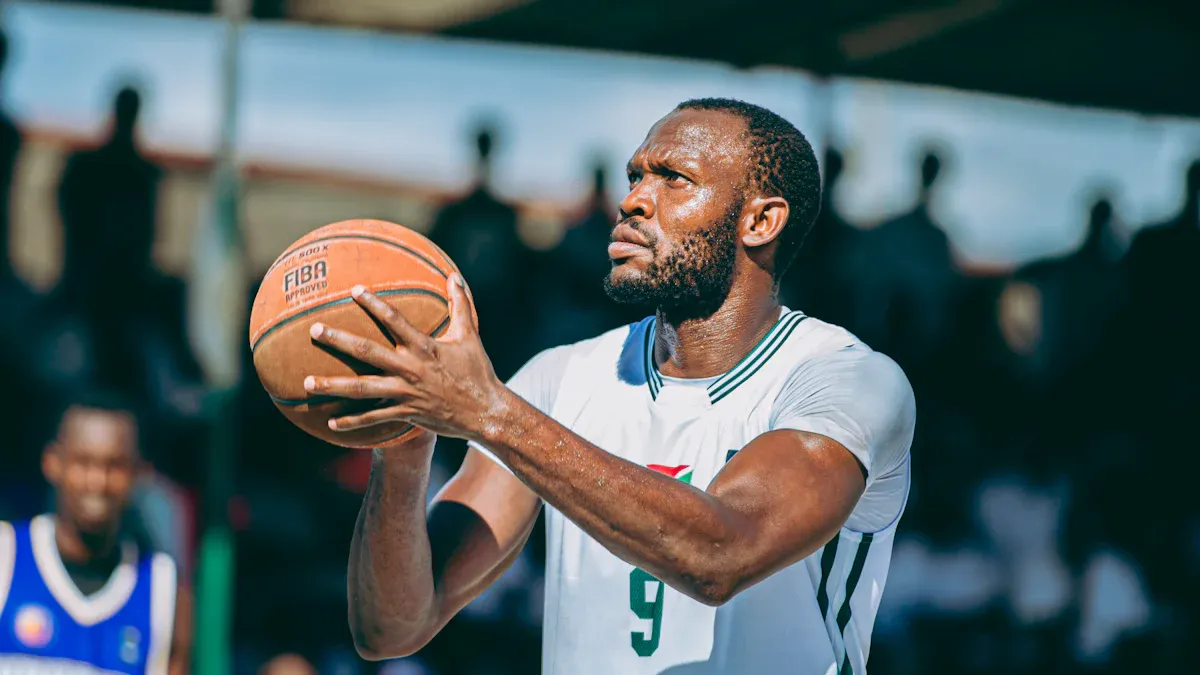
Your stance and grip are the foundation of a successful free throw. A solid base helps you maintain balance and control throughout your shot. Here are some key points to consider:
Feet Position: Stand with your feet shoulder-width apart. Position your shooting foot slightly ahead of the other foot. This stance provides stability and balance.
Body Orientation: Face your target with your feet and hips aligned. This alignment helps you control your center of mass, making it easier to aim accurately.
Grip Technique: Use all five fingers to grip the ball. Keep a small space between your palm and the ball. This grip allows for better control and helps you apply the right amount of force.
Balance Hand Usage: Your non-shooting hand should stabilize the ball. This prevents it from slipping as you prepare to shoot.
Principle | Explanation |
|---|---|
Stable Base | Feet should be shoulder-width apart with the shooting foot slightly in front for balance. |
Body Orientation | Feet and hips should face the target to enhance control over the Centre of Mass. |
Grip Technique | The shooting hand should grip the ball with all five fingers, ensuring space between the palm and ball. |
Balance Hand Usage | The non-shooting hand stabilizes the ball to prevent slipping during the shot. |
Motion Control | The grip affects the ball’s trajectory and can be adjusted to create backspin. |
Arm Movement | Arms should move from the shot pocket to above the head, generating upward force for projection height. |
Shooting Motion
The shooting motion is where the magic happens. It’s all about rhythm and mechanics. According to professional basketball coaches, successful free throw shooting requires confidence, sound mechanics, and a consistent routine. Here’s how to execute the perfect shooting motion:
Start High: Begin your shot with the ball at a high position. This helps you generate power and maintain control.
Legs for Rhythm: Use the down-and-up motion of your legs to create rhythm. This motion should feel natural and fluid.
Elbow Alignment: Keep your elbow in line with the basket. This alignment is crucial for accuracy.
Focus on Release: Aim for a smooth release. The optimal launch angle is around 52 degrees, which helps the ball travel on the right path.
“Successful free throw shooting requires confidence, sound mechanics, a routine, relaxation, rhythm, and concentration. Most players use the one-hand shot for a free throw, taking the time to control each of the basic mechanics: balance, hand position, elbow-in alignment, sight (focus), rhythm, and follow-through.”
Follow-Through
The follow-through is often overlooked, but it plays a vital role in your shooting success. Studies show that the accuracy of your free throws improves with each consecutive attempt. This calibration effect highlights the importance of a consistent follow-through. Here’s what to keep in mind:
Muscle Activation: Elite players emphasize smooth movements during their follow-through. This fluidity helps maintain stability and accuracy.
Joint Movements: Pay attention to your joints, especially in your arms and wrists. Consistent movements lead to better results.
Visualize Success: Picture your ideal shot as you follow through. This mental image can enhance your performance.
The follow-through not only affects your current shot but also influences your next attempts. So, make sure to practice it consistently to perfect your free throws.
Mental Preparation for Free-Throw Success
Visualization Techniques
Visualization is a powerful tool that can enhance your free throw performance. By imagining yourself making successful shots, you can train your mind to react positively in real game situations. Research shows that players who visualize their shots can improve their performance significantly.
Here’s a breakdown of how visualization can work for you:
Group | Activity | Improvement |
|---|---|---|
1 | Practiced free throws for 20 minutes daily | Improved |
2 | Visualized shooting free throws for 20 minutes daily | Improved at almost the same rate as Group 1 |
3 | Neither practiced nor visualized | No improvement |
To make your visualization more effective, consider these tips:
Involve Sight, Sound, and Feeling in your visualization.
Visualize in 1st person to enhance effectiveness.
Practice consistently to improve your visualization skills.
When you visualize a swish, you create a mental image that can boost your confidence and help you perform under pressure.
Building Confidence
Confidence plays a crucial role in your free throw success. When you believe in your ability to make the shot, you’re more likely to succeed. Here are some strategies to build your confidence:
Do not fear failure: Focus on positive thoughts and avoid situations that induce fear.
Start everything with success: Begin practice with form shooting to build confidence.
Use visualization: Imagine making shots to improve confidence.
Start a confidence journal: Write down successes to reinforce positive outcomes.
Understanding that all shots carry their own intrinsic value is crucial. A free throw’s importance should not be influenced by the game’s context; the focus should solely be on making the shot. Studies show that experienced players often outperform less experienced ones in predicting their free throw outcomes, highlighting how confidence correlates with performance.
Study Focus | Findings | Conclusion |
|---|---|---|
Outcome prediction abilities of basketball players | Expert players outperformed non-players in predicting free throw outcomes. | Experience enhances prediction accuracy. |
Self-executed basketball free throws | Experts predicted their shots better than observers. | Internal predictions correlate with shooting performance. |
Response bias in predictions | Experts showed a bias towards predicting successful shots. | Confidence may influence prediction outcomes. |
Managing Pressure
Managing pressure is essential for free throw success, especially in high-stakes situations. Here are some effective strategies to help you stay calm and focused:
Mental training techniques help you embrace pressure through visualization and scenario practice.
Positive self-talk and breathing techniques can channel pressure into focus.
Developing pre-shot routines that include mental preparation leads to consistent performance.
Practicing under simulated game pressure builds mental resilience.
Research indicates that emotional intelligence is linked to better emotional control and competitive success. Elite athletes often transform anxiety into alertness, which helps maintain performance.
Aspect | Description |
|---|---|
Emotional Intelligence | Linked to better emotional control and competitive success, crucial for high-pressure situations. |
Reframing Emotions | Elite athletes transform anxiety into alertness to maintain performance. |
Mindfulness Training | Improves attentional control and emotion regulation, leading to performance benefits. |
By incorporating these mental preparation techniques into your routine, you can enhance your free throw shooting and perform at your best, even under pressure.
Free Throw Shooting: Practice Drills
Routine Drills
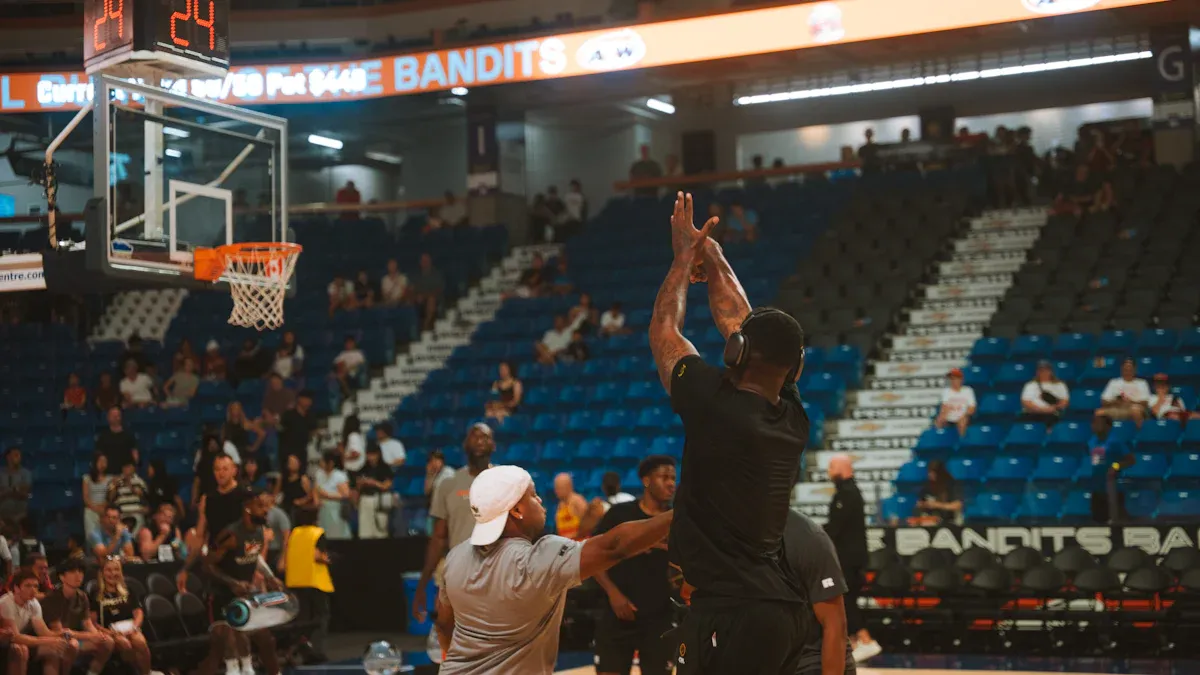
To improve your free-throw shooting, you need to establish a solid routine. Here are some effective drills to consider:
Alignment: Always align yourself with the free throw line and the basket.
Visualization: Picture a successful shot before you take it. This mental prep can boost your confidence.
Breath Control: Take deep breaths to calm your nerves and focus on the task at hand.
Consistent Cadence: Keep a steady rhythm in your routine. This helps create muscle memory.
Target Alignment: Experiment with different focal points on the rim to find what works best for you.
You might also want to try specific drills like the Steve Nash Free Throw Shooting Drill. This drill helps you enhance your shooting technique by focusing on form and consistency.
Game Simulation
Simulating game situations during practice can prepare you for real pressure. Incorporate free throws after making shots in a game-like scenario. This approach mimics the stress of a real game and helps you learn to perform under pressure.
Consider using the ‘3 For’ drill, where you set goals for yourself before progressing. This method not only builds accountability but also simulates the pressure of needing to make crucial shots.
Tracking Progress
Tracking your progress is essential for improvement. Here are some tools and methods to help you:
Shooting Charts: Use a whiteboard or shooting chart to log your attempts and successes. This visual representation keeps you accountable.
Augmented Reality Systems: Tools like the Noah Shooting System provide real-time feedback on your shooting angles, helping you refine your technique.
Regular Reviews: Set aside time each week to review your shooting percentage. This will help you see where you need to focus your practice.
By consistently practicing these drills and tracking your progress, you’ll build the muscle memory needed for effective free-throw shooting.
Mistakes to Avoid in Free Throw Shooting
Poor Form
One of the biggest mistakes you can make in free throw shooting is having poor form. If your stance, grip, or shooting motion is off, it can lead to missed shots. You want to ensure that your feet are shoulder-width apart and that your shooting elbow is aligned with the basket. A solid foundation helps you maintain balance and control. Remember, even small adjustments can make a big difference in your accuracy.
Rushing the Shot
Rushing your shot is another common pitfall. When you hurry, you often lose focus, which can lead to missed opportunities. Research shows that players who rush their shots experience insufficient fixation duration and unstable visual attention. This negatively impacts free throw accuracy. Specifically, longer fixation times and fewer fixations are linked to higher shooting accuracy. To avoid rushing, consider these strategies:
Establish a personal routine and take your time, ensuring not to rush the shot.
Take a deep breath to enhance concentration on the shot.
Focus entirely on making the shot while blocking out distractions.
By slowing down and concentrating, you can improve your chances of sinking that free throw.
Inconsistent Routine
Having an inconsistent routine can also hurt your free throw performance. Studies indicate that an inconsistent training routine adversely affects shooting accuracy. For instance, a study found that after a brief 4-week training program, there was no improvement in free throw performance. This suggests that you need a consistent approach to allow your body to adapt to new techniques. Stick to a routine that works for you, and practice it regularly to build muscle memory.
Avoiding these mistakes can significantly enhance your free throw shooting. Focus on maintaining good form, taking your time, and establishing a consistent routine. With practice, you’ll see improvements in your game!
Tips for Consistency in Free Throws
Pre-Shot Routine
Establishing a solid pre-shot routine can significantly enhance your free throw consistency. Top shooters like Elena Delle Donne emphasize the importance of this routine. Here are some key elements to consider:
Spot the center of the foul line.
Bounce the ball three times.
Repeat a cue phrase to help normalize your shot.
This routine helps you focus and reduces pressure, especially during away games where distractions can disrupt your concentration.
Staying Relaxed
Staying relaxed is crucial for maintaining your shooting accuracy. Research in sports psychology shows that mindfulness-based interventions (MBIs) can improve performance. Here’s how you can stay calm:
Practice deep breathing before your shot.
Visualize making the shot successfully.
Focus on the rhythm of your routine.
By incorporating these techniques, you can channel your nerves into focus, which is essential for sinking those free throws.
Regular Practice
Regular practice is vital for improving your free throw shooting. Aim to practice in sets of 10, 20, or even 100 shots. This repetition helps refine your mechanics and boosts your confidence. Here are some tips for effective practice:
Set specific goals for each practice session.
Track your shooting percentage to monitor improvement.
Make practice a part of your routine to develop muscle memory.
The more you practice, the more consistent your shooting will become. Remember, accuracy is key in basketball, and regular practice is your best friend in achieving it.
Perfecting your free throws takes dedication, but you can achieve it! Remember these key points:
Focus on your shooting form, including stance, grip, and follow-through.
Mental preparation is crucial. Techniques like visualization and self-talk can boost your confidence.
Consistent practice is essential. A structured routine can lead to significant improvements.
For instance, athletes who implemented a personalized pre-performance routine saw their free throw percentage rise to 60-65%. This shows how combining technique, mental strategies, and practice can enhance your performance.